Arrival in a New Land

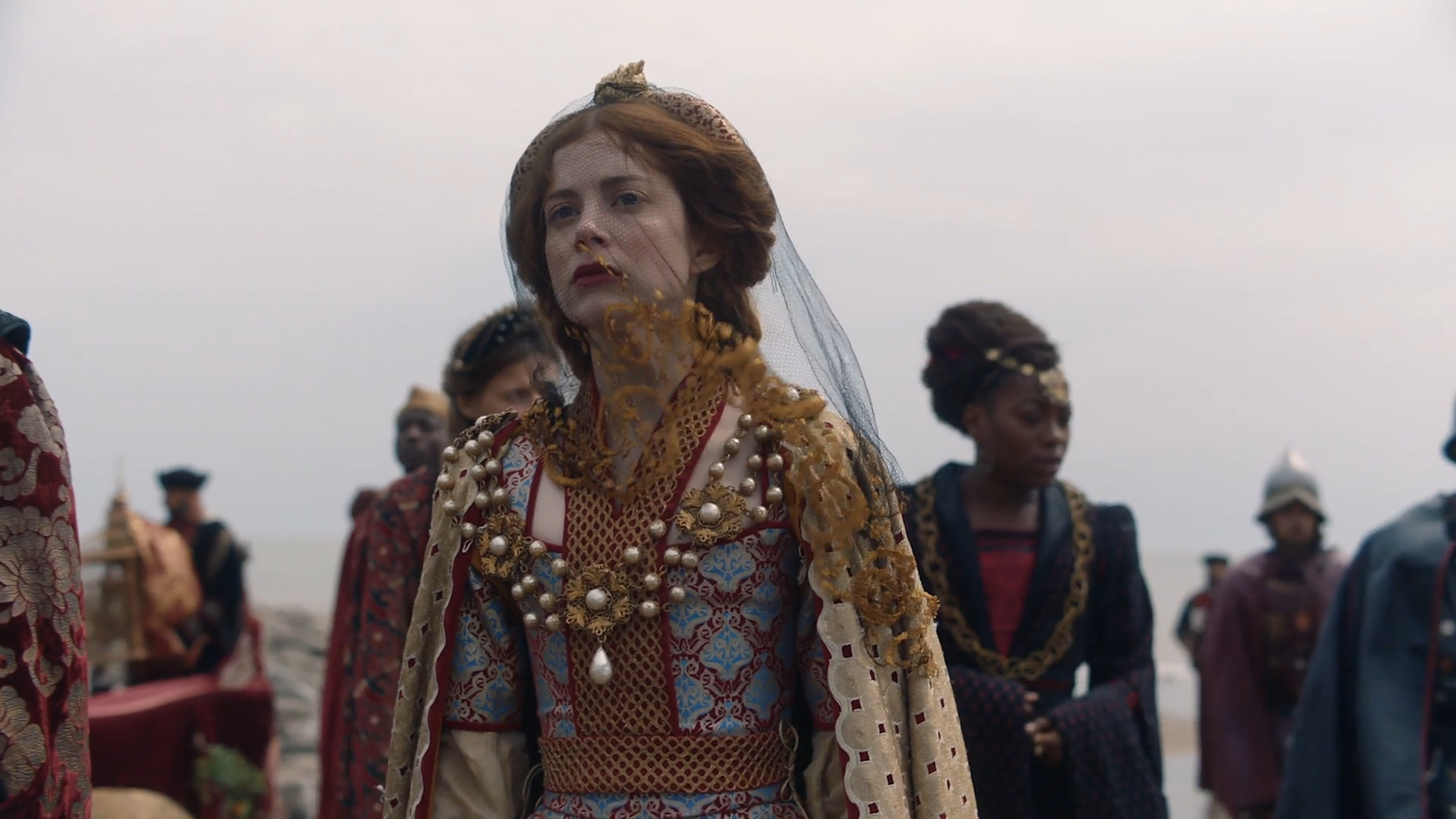
When the fifteen-year-old Catalina of Aragon disembarked at Plymouth in October 1501 after a difficult sea voyage, she stepped into England not only as a diplomatic bride but as a living embodiment of Spanish court culture. Her extensive wardrobe, carefully prepared in the households of her parents Isabel of Castile and Fernando of Aragon, immediately set her apart from the English ladies who greeted her. Contemporary observers recorded the strangeness and richness of her appearance. Theresa Earenfight’s biography pays particular attention to these material details, showing how Catherine’s clothing, shoes and overall presentation functioned as both personal expression and political communication from the first days of her arrival.
The Spanish royal court of the late fifteenth century had developed a distinctive and highly sophisticated fashion culture. It combined Castilian, Aragonese, Burgundian, Italian and Islamicate influences into a recognisable style that emphasised structure, luxurious fabrics and careful display of wealth. Catherine had grown up moving between the great cities and royal residences of the Iberian peninsula, absorbing these tastes. When she travelled to England she brought that entire visual language with her.
The Verdugado and the Spanish Silhouette
The most revolutionary element of Catherine’s wardrobe was the verdugado, the hooped underskirt that would later become known in England as the farthingale. Constructed with graduated hoops of cane, wood or stiffened fabric, the verdugado held the outer skirt away from the body in a rigid, conical or gently rounded shape. English women at the turn of the sixteenth century still wore softer, more fluid gowns that followed the natural line of the body more closely. The Spanish hooped skirt created a dramatic and imposing silhouette that moved with a characteristic sound and presence.
Earenfight notes that page after page of Spanish household accounts list clothing that reveals this distinctive fashion. The verdugado was already well established at the Spanish court and was considered an essential component of formal dress for royal and noble women. Catherine’s decision to wear it in England introduced a completely new structural principle into Tudor fashion. Over the following decades the farthingale would be adopted, adapted and exaggerated by English women, becoming one of the defining features of later Tudor and Elizabethan dress.
Her gowns themselves were cut from generous quantities of silk satin, velvet and other costly materials. They featured full, deeply pleated sleeves that were often constructed in layers, with elaborate oversleeves slit or turned back to reveal contrasting undersleeves of finer fabric. Spanish taste in this period strongly favoured darker colours, especially black. Black velvet and black satin were associated with dignity, wealth and seriousness rather than with mourning alone. English fashion of the same years tended toward brighter and lighter colours and preferred a more closely fitted bodice with a low square neckline that emphasised the shoulders and upper chest.
Shoes That Announced Identity
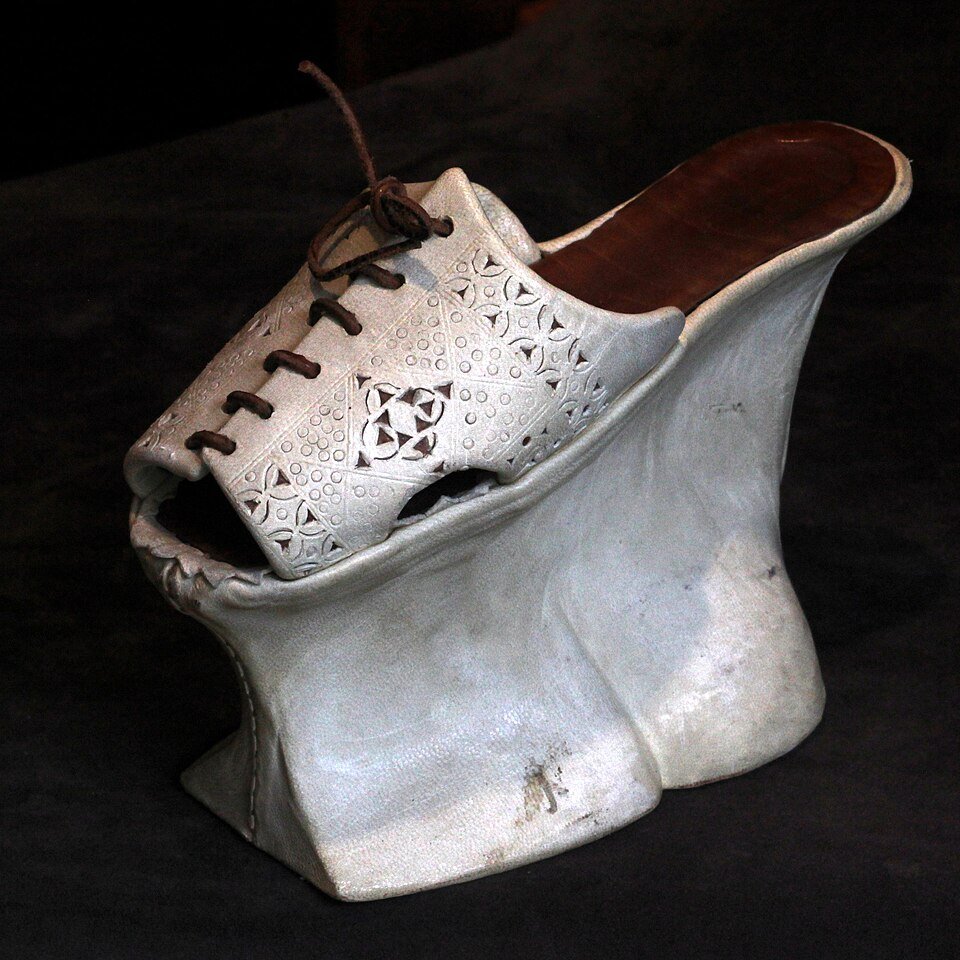
Catherine’s footwear drew particular attention and comment. She wore chapines, elevated platform shoes with thick cork soles that raised the wearer several inches above the ground. These shoes were frequently covered in rich fabric and decorated with gold trim, embroidery, gilt tooling or even small jewels. An inventory taken shortly after her death in 1536 still recorded seven pairs of shoes “of the Spanysshe fashion, corked and garnysshid with golde.” The chapines served a practical purpose by protecting the hems of expensive gowns from the mud and filth of streets and courtyards, but they were equally important as status symbols. Their height and decoration made the wearer’s wealth and refinement visible with every step.
She also brought borçeguíes, soft boots or high shoes made of the finest cordovan leather from Córdoba. Cordovan leather was prized throughout Europe for its quality and durability. These buskins could be elaborately tooled with patterns that reflected Hispano-Muslim decorative traditions, including animal motifs and intricate floral designs. English shoes of the early sixteenth century were generally lower, simpler in cut, and finished with broader, squarer toes. The contrast between Catherine’s elevated, decorated Spanish footwear and the plainer English styles would have been immediately apparent to anyone who saw her walk.
The Wedding Attire of November 1501
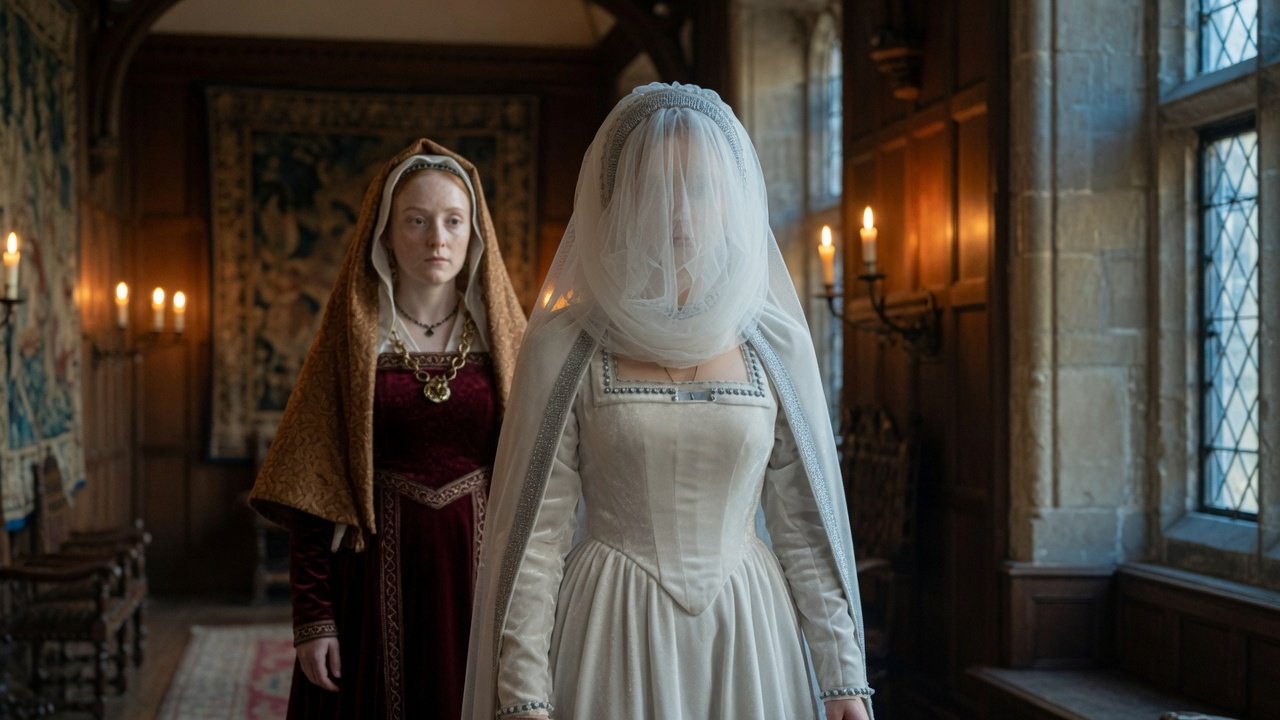
On the morning of her marriage to Prince Arthur in St Paul’s Cathedral, Catherine’s appearance was recorded in careful detail by English observers. She wore a gown of white silk or satin whose wide, pleated sleeves followed Spanish fashion. The skirt was held out by the verdugado; one chronicler described “certain rownde hopys beryng owte ther gownes from ther bodies aftir their countray maner.” The long train of the dress was carried by Cecily of York, sister of Queen Elizabeth of York and a senior lady of the court. Catherine’s auburn hair was worn loose over her shoulders, a traditional European sign of virginity and bridal status, rather than confined beneath the pointed gabled hood that English women favoured.
The overall effect was simultaneously splendid and foreign. The white fabric, the structured skirt, the distinctive sleeves and the unbound hair announced that the new Princess of Wales had brought her own aesthetic standards with her. English writers remarked on the richness of the materials and the unusual cut of the garments. In that single public appearance, Catherine made a clear visual statement about her identity and the prestige of the dynasty from which she came.
Embroidery, Textiles and Household Style
Beyond the major garments, Catherine introduced finer textile practices that would leave a lasting mark. Spanish blackstitch embroidery, a precise technique in which geometric or small floral patterns are worked so that the design appears identical on both sides of the fabric, came with her household. This style, later sometimes called the Holbein stitch in English sources, was used on shifts, collars, cuffs, and household linens. It spread from Catherine’s immediate circle into wider English use among noble and gentry women.
The demand for high-quality Spanish silks increased after her arrival. Her taste for certain luxury goods, including tooled leather and finely made accessories, also influenced the court. Earenfight emphasises that these were not merely decorative choices. They formed part of a coherent material culture that Catherine had absorbed during years of travel across the Iberian peninsula and that she deliberately maintained in her new environment.
English Reactions and Cultural Contrast
English observers found Spanish dress more complex, heavier and less revealing than their own. Where early Tudor gowns often featured low square necklines and a clear definition of the waist through stomachers or fitted bodices, Spanish fashion maintained a more covered and architecturally structured appearance. The preference for black velvet and satin struck some commentators as sombre when set against the brighter English palette of the period. At the same time, the sheer richness of the fabrics and the novelty of the hooped skirts and elevated shoes commanded respect and curiosity.
Catherine’s Spanish attendants reinforced the impression. Their own versions of the verdugado and chapines, together with distinctive riding equipment that included unusual stirrups, turned the entire incoming entourage into a moving display of Iberian style. Henry VII’s court, still relatively young and eager to demonstrate its international connections and prestige, absorbed these elements with considerable interest.
Adaptation and Enduring Influence
Over the years Catherine gradually incorporated some English elements into her wardrobe. She ordered gowns that mixed Spanish cuts with local preferences and sometimes adapted her style for specific political occasions. Yet she never entirely abandoned the fashions of her youth. She continued to favour black velvet gowns with wide sleeves and retained her preference for Spanish-style shoes. The verdugado she had introduced evolved into the English farthingale and became a dominant feature of women’s fashion throughout the later Tudor period. Spanish blackstitch embroidery and the taste for certain luxury textiles also remained part of the courtly repertoire.
Her clothing upon arrival therefore did far more than fulfil the practical need for covering and warmth. It announced her identity as a Spanish infanta, displayed the wealth and cultural sophistication of her parents’ dual monarchy, and began a quiet but lasting transformation of the visual culture of the English royal household. In the careful descriptions preserved by contemporary witnesses and analysed in detail by Earenfight, we see a young woman who arrived not merely as a diplomatic asset but as the bearer of a distinct, confident and influential style that would help shape English fashion for generations.
References
Earenfight, Theresa. Catherine of Aragon: Infanta of Spain, Queen of England.