
A Different Kind of Terror
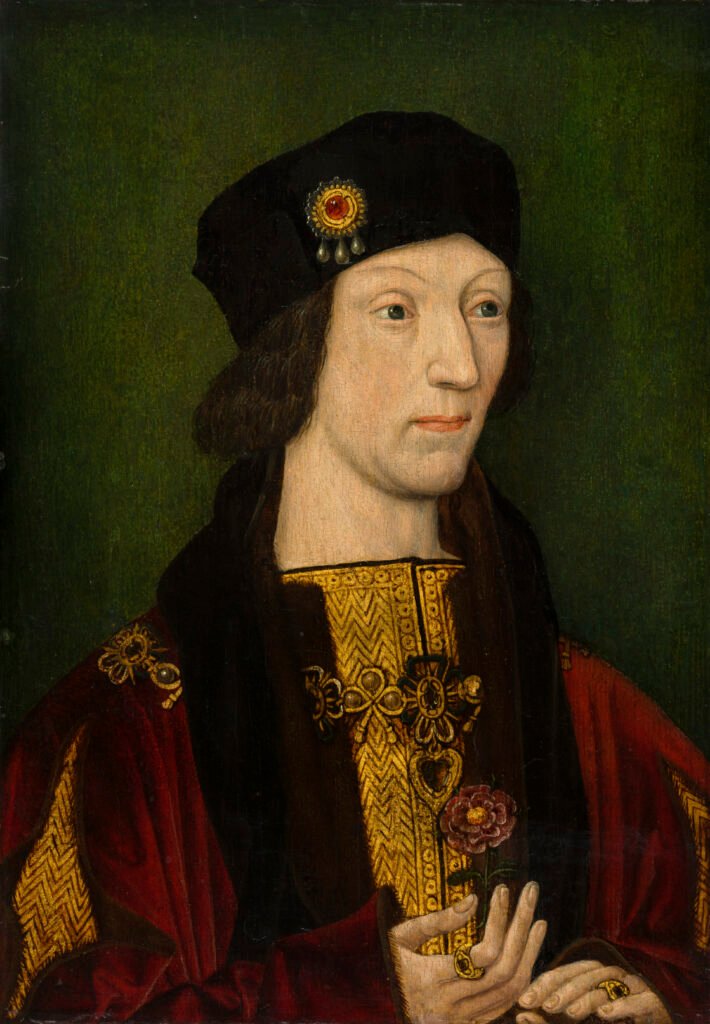
Henry VII is often remembered as a cold, distant and deeply suspicious monarch. Contemporary chroniclers and later historians frequently emphasised his avarice and his relentless accumulation of treasure. Yet one of the most distinctive and least dramatic features of his rule was the relative restraint he showed in the matter of public executions. Unlike many of his medieval predecessors, who relied heavily on the scaffold to eliminate opponents, Henry developed a quieter and in many ways more effective system of control. Instead of regularly sending traitors to their deaths, he preferred to bind them with financial obligations so heavy that their independence, influence and sometimes their entire family fortunes were destroyed. Thomas Penn’s Winter King demonstrates in detail how this network of bonds, recognizances and suspended penalties became one of the central instruments of early Tudor government.
The choice was deliberate. In the fragile years after Bosworth Field, Henry faced a nobility accustomed to rapid changes of allegiance. Open executions risked creating martyrs, deepening feuds and further destabilising an already unsettled realm. Financial ruin, by contrast, was flexible, deniable and permanent. A nobleman who remained alive but heavily indebted was often more useful, and more thoroughly neutralised, than one whose head had been displayed on London Bridge.
The Logic Behind the Bonds
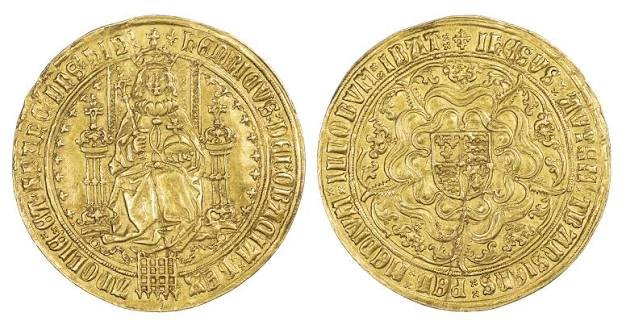
The system rested on a simple but powerful idea. Subjects were required to enter into written obligations that committed them to pay large sums of money if they failed to meet specific conditions. These conditions usually involved loyalty to the king, keeping the peace, appearing when summoned, or refraining from supporting particular individuals. In many cases the penalty was suspended. As long as the subject behaved, the money remained uncollected. The moment he transgressed, the full amount became immediately due.
Penn shows that such bonds were already part of the ordinary legal fabric of late medieval England, used to guarantee business deals and acknowledge debts. Henry and his administrators transformed them into a systematic tool of political control. They were recorded with meticulous care in the books of the king’s chamber, often under the king’s own eye. Over the years the volume of these obligations grew until hundreds of men, from the greatest peers to relatively modest gentlemen, found themselves tied to the crown by documents that could be activated at will.
The psychological effect was profound. A man who knew that a single misstep could trigger financial catastrophe tended to police his own behaviour. The threat hung over him continuously, without the need for constant surveillance or repeated public spectacles of punishment.
How the System Expanded
In the early years of the reign the use of bonds remained relatively conventional. After the second flight of Edmund de la Pole, Earl of Suffolk, in the early 1500s, the approach became far more aggressive. Henry’s officers began to employ bonds not merely as punishments for offences already committed but as instruments of pre-emption. Potential troublemakers were bound in advance so that any future disloyalty would carry an immediate and ruinous cost.
The amounts involved were often staggering. Lords were bound for thousands of pounds, sums that could cripple even substantial estates. Sureties were frequently required, meaning that friends, relatives or clients stood to lose money as well. The ruin of one man could therefore threaten an entire affinity. Penn notes that this web of mutual obligation created a powerful deterrent. Men who might once have risked rebellion now calculated the damage not only to themselves but to everyone connected to them.
Examples of Financial Pressure
The young Edward Stafford, Duke of Buckingham, experienced the system while still a minor. Henry extracted large payments and forced him into bonds that eventually totalled several thousand pounds. Lord Mountjoy’s terms of office were so heavily burdened with financial sureties that he lived in a state of permanent anxiety, constantly aware that any failure could activate crushing penalties. Even experienced royal servants such as Giles, Lord Daubeney, found themselves bound for significant sums after financial irregularities came to light.
In many instances the crown did not need to secure a conviction for treason in open court. The existence of outstanding bonds gave Henry leverage that was both quieter and more flexible than a formal attainder. Men who sensed that the king’s favour had cooled often preferred to “fall to agreement,” paying fines and accepting new obligations rather than risk a full investigation. Some were induced to inform on others in the hope of mitigating their own burdens.
By the later years of the reign the system had reached an extraordinary intensity under the management of Edmund Dudley and Richard Empson. These two lawyers and administrators trawled through old records, revived long-forgotten debts, and imposed fresh bonds with relentless energy. The number of people indebted to the crown rose by hundreds each year. The total sums outstanding climbed steeply. What had begun as a selective political tool had become a widespread mechanism of fiscal and social control.
Selective Use of the Scaffold
Henry VII did not renounce capital punishment. The executions of Perkin Warbeck and Edward, Earl of Warwick, in November 1499 showed that he remained capable of decisive and public severity when he judged it necessary. The death of Warwick, in particular, removed the last clear male claimant from the House of York. Yet such cases were comparatively rare when set against the scale of the financial apparatus. Penn’s account makes clear that the everyday instrument of discipline was the bond book rather than the executioner’s axe.
This selective approach had advantages. High-profile executions could still be used to demonstrate power and to eliminate the most dangerous figures. At the same time, the broader political nation was kept in check by the slower, less dramatic pressure of debt and suspended penalties. The king avoided the cycle of blood feuds that repeated noble executions so often produced in the fifteenth century.
The Political and Social Consequences
The cumulative effect of the system was to reshape the relationship between the crown and the nobility. Traditional loyalties based on personal honour, regional power or family tradition were gradually overlaid by a new calculus of financial risk. A lord’s ability to maintain an independent affinity was constrained by the knowledge that both he and his followers might be bound to the king. The crown’s own coffers benefited, of course, but the deeper purpose was political security.
When Henry VIII ascended the throne in 1509, one of his first and most popular acts was the cancellation of many of these bonds and the arrest of Empson and Dudley. The widespread relief that followed revealed how deeply the system had penetrated English political life. Yet the method itself left a lasting legacy. Later Tudor governments continued to use recognizances and financial pressures, even if they never again matched the intensity of the final years of Henry VII’s reign.
Control Through Ledgers Rather Than Blood
Henry VII’s preference for financial destruction over wholesale execution was not an expression of mercy. It was a calculated strategy of power suited to a usurper who needed stability more than vengeance. By keeping men alive while steadily eroding their independence, he neutralised opposition more thoroughly than repeated purges could have achieved. The threat of ruin proved, in many cases, more effective than the threat of death.
The Winter King ruled through carefully kept account books as much as through statutes and proclamations. His silent weapon was the bond that could be called in at any moment, the suspended penalty that turned every potential traitor into a hostage of his own fortune. In the end, many who might have died as traitors simply lived on as debtors, their capacity for resistance slowly strangled by the obligations they had been forced to accept. It was a form of power less spectacular than the scaffold, but in the hands of Henry VII it proved remarkably enduring.
References
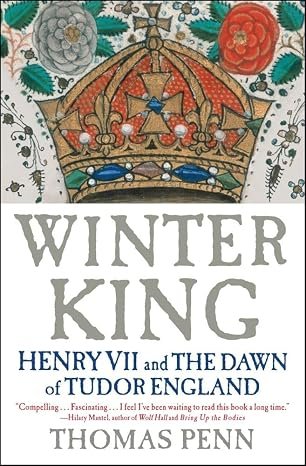
Penn, Thomas. Winter King: Henry VII and the Dawn of Tudor England.