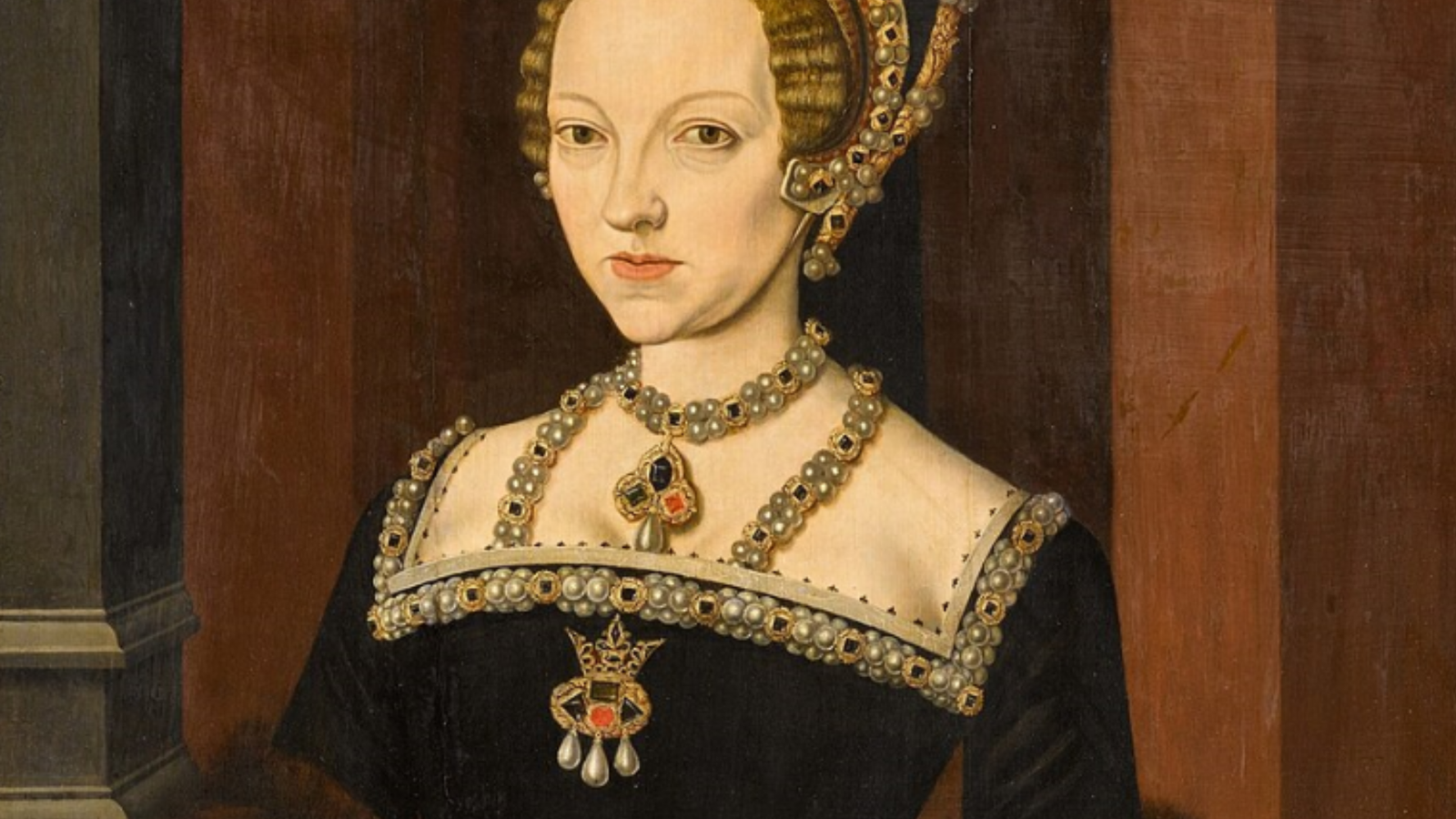
In the mid-1540s, Queen Katherine Parr undertook one of the most ambitious literary and religious projects of the late Henrician period: the translation into English of Desiderius Erasmus’s Paraphrases upon the New Testament. This large-scale enterprise aimed to make Erasmus’s accessible commentary on the Gospels and other New Testament books available to a wider English audience. Katherine organised a team of translators and placed the overall editorial direction in the hands of the scholar and playwright Nicholas Udall.
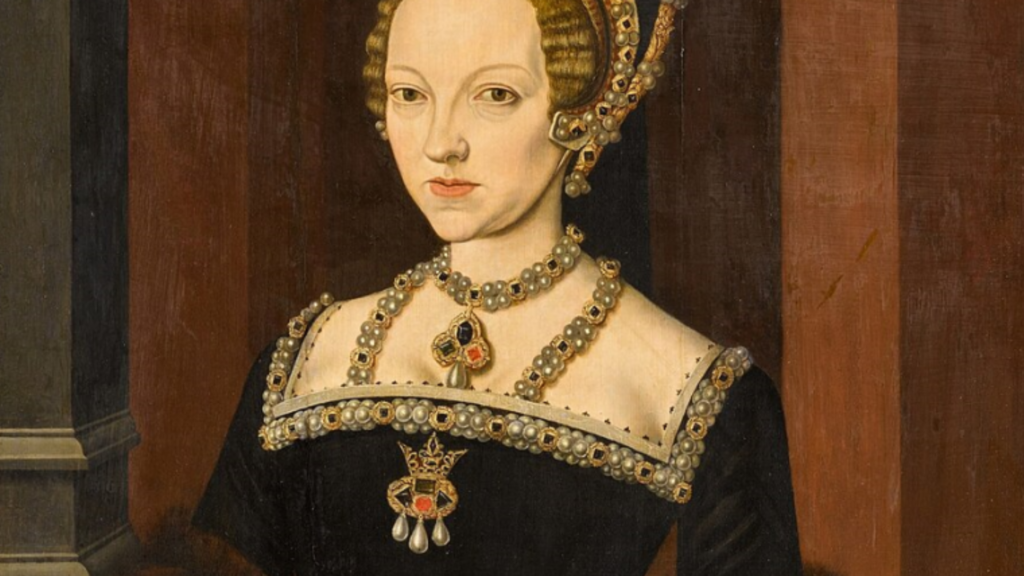
Among those she recruited was her stepdaughter, the Lady Mary. In The Myth of “Bloody Mary”, Linda Porter describes how Mary became involved:
“This was a translation into English of Erasmus’s Latin Paraphrases upon the New Testament. Mary undertook, at her stepmother’s request, the challenge of translating the paraphrase of St John’s gospel. The work kept her occupied for some while, until illness meant that her chaplain, Francis Mallett, had to complete it, but her contribution was much praised by Nicholas Udall, the editor of the series. This ‘peerless flower of virginity’, he wrote, ‘doth now also confer the inestimable benefit of furthering both us and our posterity in the knowledge of God’s word and to the more clear understanding of God’s gospel’.”
Porter emphasises that Mary’s participation was a natural extension of her education:
“It appeared quite natural for a woman like Mary, who had always prided herself on her ability in Latin, to turn her attention to such a task. After years of relative intellectual deprivation, she would not shy away from the stimulus being offered.”
Mary’s proficiency in Latin was long-standing. By the age of nine she could already write in the language, and by twelve her skill was widely remarked upon. She had been trained by leading humanist scholars and could translate to and from Latin with considerable facility.
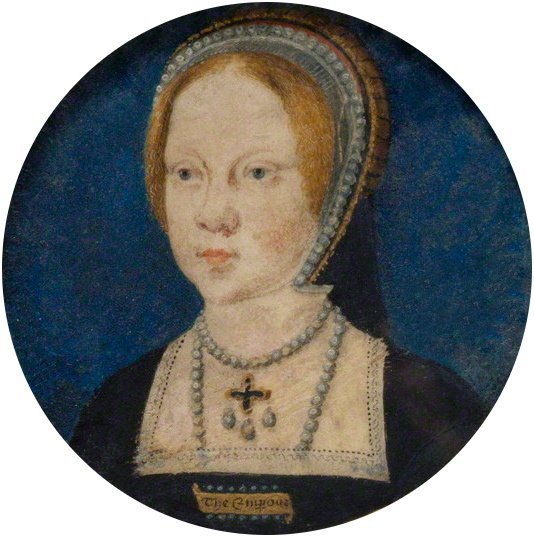
In Katherine the Queen, Porter provides further detail on the personal dynamic between the two women and quotes Katherine’s own letter encouraging Mary to accept public credit for her work:
“Now since, as I have heard, the finishing touch (as far as the translation is concerned) is given by Mallet to Erasmus’s work upon St John, and nought now remains but that proper care and vigilance should be taken in revising, I entreat you to send over to me this very excellent and useful work . . . that it may be committed to the press in due time; and farther, to signify whether you wish it to go forth to the world (most auspiciously) under your name, or as the production of an unknown writer. To which work you will, in my opinion, do a real injury, if you refuse to let it go down to posterity under the auspices of your own name… And since all the world knows that you have toiled and laboured much in this business, I do not see why you should repudiate that praise which all men justly confer on you.”
Porter concludes:
“And so Mary, the first Tudor queen, became a published author, like her stepmother, though she is scarcely remembered for having translated Erasmus’s paraphrase of what is sometimes described as the most beautiful of the Gospels into the English language.”
The completed first volume of the Paraphrases was published in 1548, during the reign of Edward VI. Edward’s royal injunctions of 1547 ordered that a copy be placed in every parish church in England, giving the work official status within the Edwardian Church.
When Mary ascended the throne in 1553, she reversed the religious settlement of her brother’s reign. The requirement that churches keep the English Paraphrases was dropped. Although claims that she ordered the systematic destruction of every copy are not fully supported by the evidence, many volumes were removed from churches as part of the broader restoration of traditional Catholic practice and the Latin liturgy.
Why did Mary remove the work from the churches?
The decision was driven by her determination to undo the Edwardian Reformation. Even though she herself had contributed to the translation years earlier, the Paraphrases had become closely identified with the Protestant regime that had ordered their presence in every parish. Under Edward, the book formed part of an official programme designed to promote vernacular scripture and Erasmian (and increasingly more radical) ideas. For Mary, restoring the Latin Mass, traditional ceremonies, and the authority of the old religion meant removing the official Protestant books that had been forced into churches. The Paraphrases, whatever their personal connection to her, belonged to that Edwardian programme and therefore had no place in the Catholic restoration she sought to achieve.
References
Porter, Linda. The Myth of “Bloody Mary”: A Biography of Queen Mary I of England. St. Martin’s Griffin, 2009.
Porter, Linda. Katherine the Queen: The Remarkable Life of Katherine Parr. St. Martin’s Press, 2010.
Read also: Katherine Parr: Author, Reformer and Queen of Ireland – VERITAS TEMPORIS FILIA