The Last Wife of Henry VIII
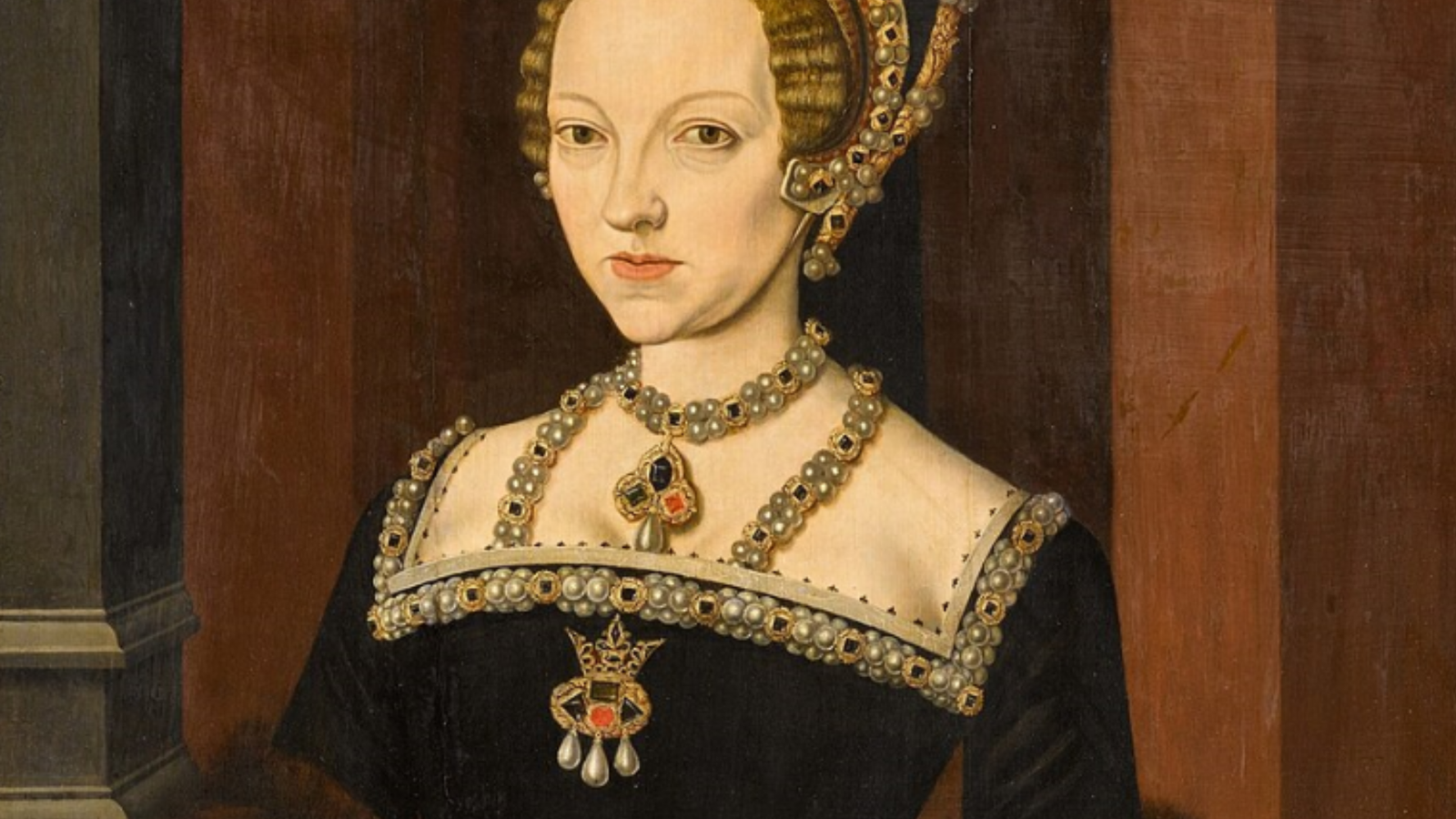
Katherine Parr occupies a distinctive and often underappreciated place among the six wives of Henry VIII. Married to the king in July 1543 at Hampton Court Palace, she became his sixth and final queen consort. By the time of their wedding she was already a widow twice over, a woman in her early thirties with experience of marriage, household management and the dangerous currents of Tudor politics. Linda Porter’s biography presents her not merely as a survivor who outlived a volatile husband but as a figure of genuine intellectual, religious and symbolic importance. Three achievements in particular set her apart from every one of her predecessors: she was the first English queen to publish original work under her own name, she became the first queen clearly identified with the Protestant cause, and she was the only one of Henry’s wives to hold the title of Queen of Ireland. These distinctions were not accidental. They arose from her education, her convictions and the particular moment in which she occupied the throne.
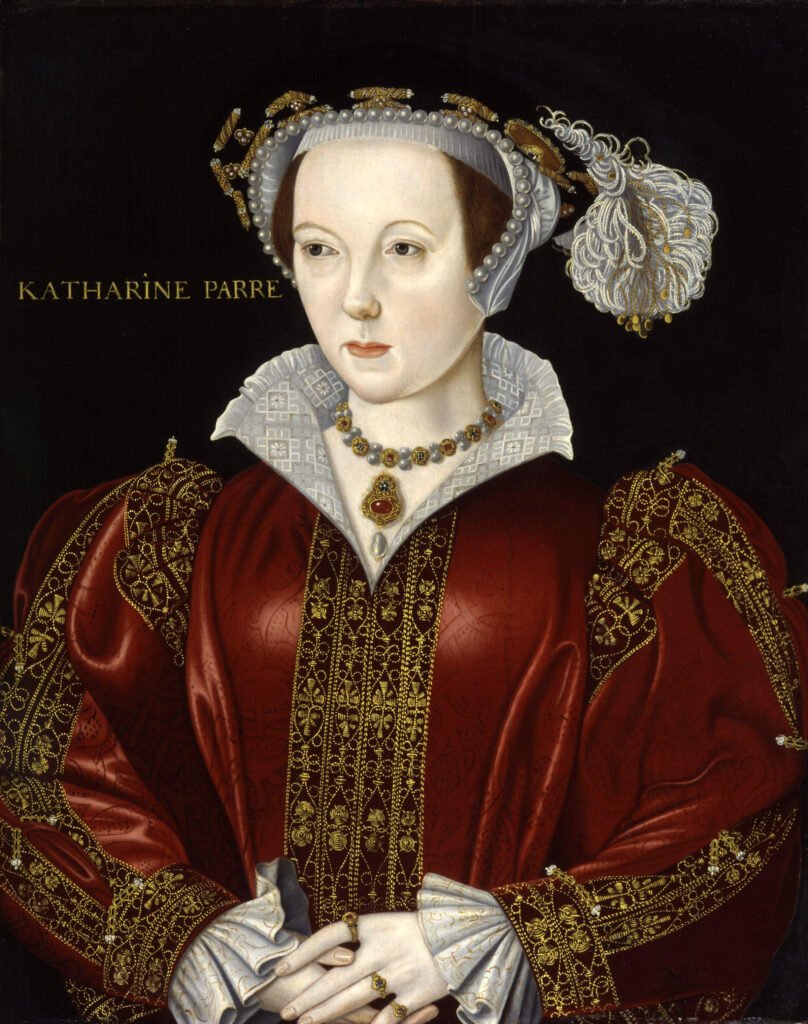
From NPG.
The First Queen to Publish a Book
In the mid-sixteenth century the appearance of a woman’s name on the title page of a printed book remained extremely rare. For a queen consort to publish was unprecedented. Katherine Parr broke that barrier. Her first substantial work, issued in 1545 by the royal printer Thomas Berthelet, was Prayers or Meditations, sometimes known in its earlier form as Prayers Stirring the Mind unto Heavenly Meditations. The volume gathered and adapted existing religious texts into a collection suitable for private devotion. It proved immediately popular and went through several editions in a short space of time. Porter records that the queen ordered handsomely bound copies, some of them richly gilt on the leather, to present as gifts. Surviving examples can still be examined today at places such as Stonor House in Oxfordshire and in the Mayor’s Parlour at Kendal.
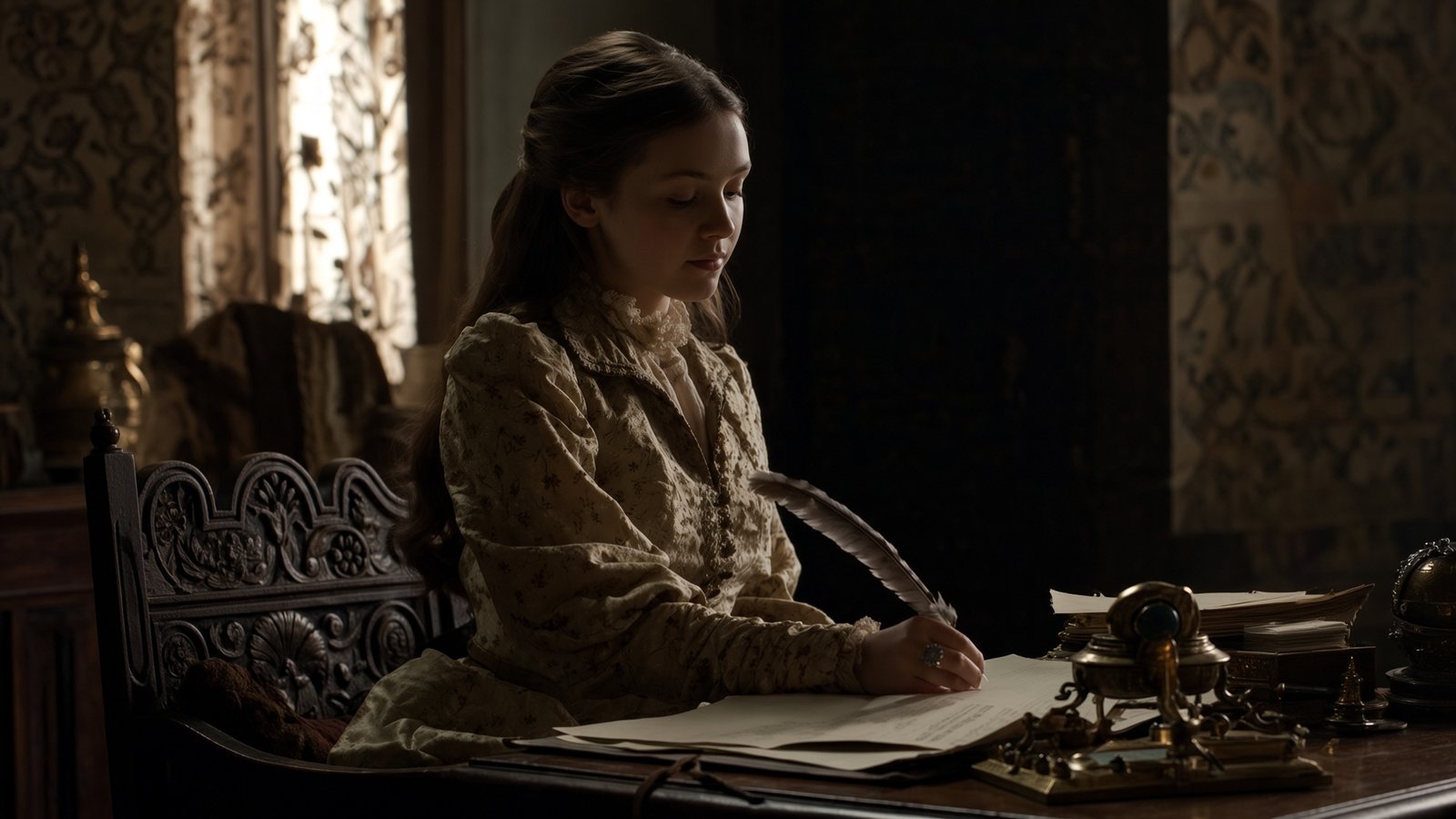
Even more significant was The Lamentation of a Sinner. Katherine began writing this original composition while Henry was still alive, but it was published only in November 1547, nine months after the king’s death. Unlike the earlier collection of prayers, the Lamentation was not a compilation. It was a personal religious meditation written in the first person, in which the author reflected on sin, repentance, faith and the central place of scripture. Porter describes it as the first work of its kind in English written by a woman. The fact that the author was a queen gave the book exceptional authority and visibility. William Cecil, then a rising young official and later Lord Burghley, supplied a long and carefully argued preface for the printed edition. The Lamentation circulated widely during the early years of Edward VI’s reign and became closely associated with the advancing cause of religious reform.
No previous English queen consort had published original religious writing under her own name in this manner. Catherine of Aragon had been a serious reader and correspondent, Anne Boleyn had owned and annotated evangelical books, and Jane Seymour and Katherine Howard left no literary legacy of this kind. Katherine Parr’s decision to appear in print as an author was therefore both a personal and a public act. It announced that a queen could speak directly to the spiritual life of the realm through the relatively new medium of the printed book.
The Making of a Protestant Queen
Katherine Parr’s religious development during the 1540s placed her firmly among the supporters of evangelical reform. The modern labels “Catholic” and “Protestant” were not yet fixed in the way later generations would use them, yet the direction of her thought is unmistakable. She favoured the reading of the Bible in English, emphasised justification by faith rather than reliance on ceremonies and traditional practices, and gathered around her a household known for advanced religious discussion. Porter shows that Katherine’s rooms became a place where scripture was read aloud, where reformed ideas were debated, and where the royal children encountered a more evangelical atmosphere than they had known before.
Her influence on the next generation was particularly important. She took a close interest in the education of Prince Edward and the Lady Elizabeth. Elizabeth, still in her early teens, translated one of Katherine’s works into Latin, French and Italian as a New Year’s gift for Henry VIII, an accomplishment that demonstrated both linguistic skill and the intellectual bond between stepmother and stepdaughter. Edward, the future king, also absorbed the religious tone of Katherine’s household. After Henry’s death, when the government of Edward VI moved rapidly in a reformist direction, Katherine’s earlier example appeared prophetic.
The publication of the Lamentation of a Sinner in 1547 confirmed her public alignment with the new religious order. The book’s stress on personal faith, its relative lack of interest in traditional intercessions, and its confidence in scripture as the foundation of belief placed it squarely within the evangelical tradition. Later Protestant writers, most notably John Foxe in his Acts and Monuments, claimed Katherine as a near-martyr who had narrowly escaped a conservative plot against her life in the final year of Henry’s reign. Whether every detail of that story can be verified remains open to debate, but the tradition took root. Katherine Parr came to be remembered as England’s first Protestant queen, a woman who had used the opportunities of her position to advance reform while her husband still lived and who continued to support it openly after his death.

Credits: Starz.
Queen of England, France and Ireland
A further distinction was political and titular. In 1541 an Irish parliament proclaimed Henry VIII King of Ireland, replacing the older and less elevated style of Lord of Ireland. When Katherine married him in 1543 she therefore became the first of his wives to hold the corresponding title of Queen of Ireland. Official documents, formal addresses and the title pages of her own published works regularly styled her “Queen of England, France and Ireland.” Porter notes that even the young Elizabeth, in a solemn declaration of loyalty, referred to her stepmother by the full triple title.
None of Katherine’s five predecessors had borne this designation. Catherine of Aragon, Anne Boleyn, Jane Seymour, Anne of Cleves and Katherine Howard had all been queens of England and, by the long-standing English claim, of France. The Irish title, however, entered formal use only after 1541. Katherine Parr was unique among Henry’s wives in carrying it. The style appeared consistently during her time as queen and underlined the expanding scope of the Tudor crown in the 1540s. It was a small but telling mark of the changing political landscape she inhabited.
The Coherence of Her Achievements
These three distinctions (authorship, Protestant identity, and the Irish title) belonged to the same coherent figure. Katherine’s willingness to publish grew directly out of her engagement with scripture and reformed theology. Her religious convictions found public expression in the books that carried her name across the kingdom. The title Queen of Ireland simply recorded the political reality of the enlarged Tudor monarchy she had married into. Together they present a queen who understood the power of the printed word, the importance of personal faith, and the symbolic weight of royal style at a moment when England’s religious and political identity was being rewritten.
Porter’s biography refuses to reduce Katherine Parr to the familiar and somewhat sentimental label of “the wife who survived.” Survival was real and required intelligence, tact and nerve. Yet survival was only the beginning of her significance. Once on the throne she used her position with purpose. She protected and educated the royal children, navigated the dangerous final years of Henry’s reign, and left behind published works that continued to circulate after her death. In the process she became the first English queen to address her subjects through the printing press, the first to be clearly identified with the Protestant cause, and the only one of Henry VIII’s six wives to be queen of Ireland as well as of England and France.
Her legacy therefore reaches beyond the domestic drama of the Tudor court. It belongs to the history of women’s writing, to the early English Reformation, and to the evolving titles of the Tudor monarchy. In the closing years of Henry VIII’s reign and the opening phase of England’s religious transformation, Katherine Parr stood at an important intersection of literature, faith and royal authority. She was not merely the last of Henry’s wives. She was a published author, a religious pioneer, and a queen whose full title reflected the growing reach of the crown she had married.
Reference:
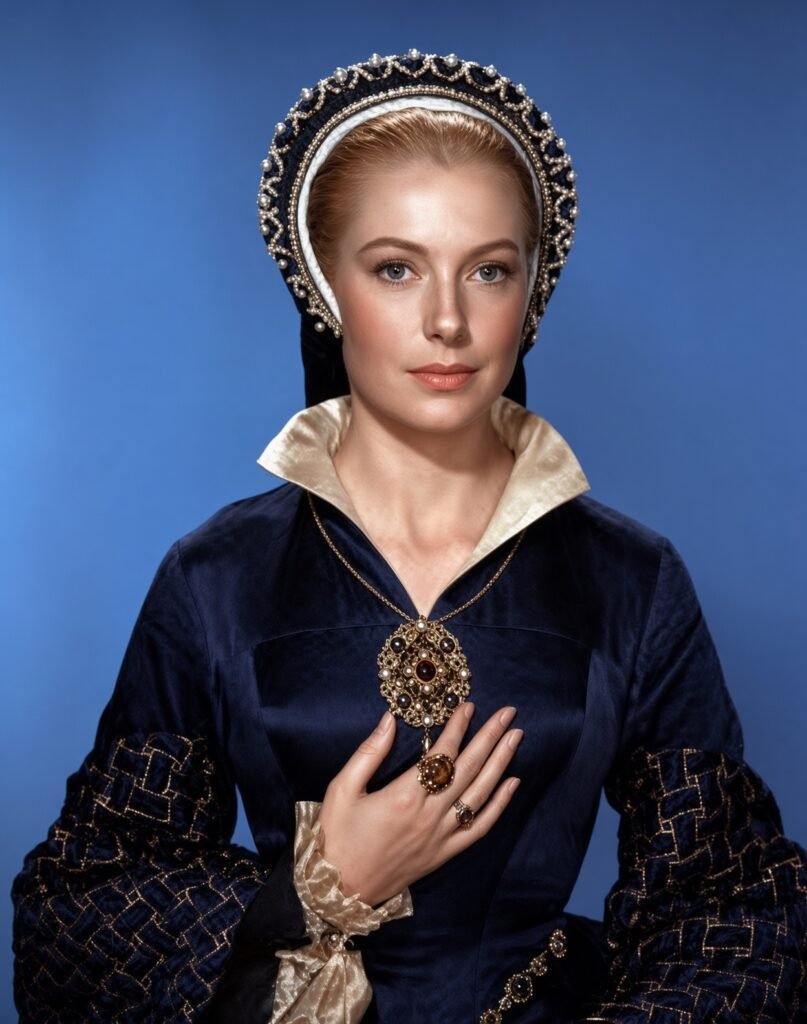
Porter, Linda. Katherine the Queen: The Remarkable Life of Katherine Parr.