A Dynasty Mapped Through Place
The Tudor period produced an extraordinary concentration of royal women whose lives shaped the course of English history in profound and lasting ways. Their birthplaces and the locations of their deaths form a geographical map of the dynasty itself, revealing patterns of power, exile, privilege and tragedy. Some of these women entered the world in the great royal palaces that lined the River Thames, surrounded by the ceremonial splendour of the court. Others were born in distant European cities or in the quieter surroundings of English manor houses far from the centre of government. Their deaths occurred in equally varied settings. Several ended their lives within the walls of the Tower of London. Others died in remote country houses, in Scottish castles, or in the private chambers of palaces where they had once held authority. This article traces those places for the queens consort and the reigning queens of the Tudor age. It also includes the daughters of Henry VII, whose marriages carried Tudor blood into Scotland and France, and, in a clearly symbolic sense, Lady Jane Grey. Although Jane Grey was never crowned and her claim to the throne lasted only nine days, her birth and death locations form part of the same broader story of Tudor royal women and are noted here with that important distinction in mind.
Elizabeth of York: The Foundational Queen
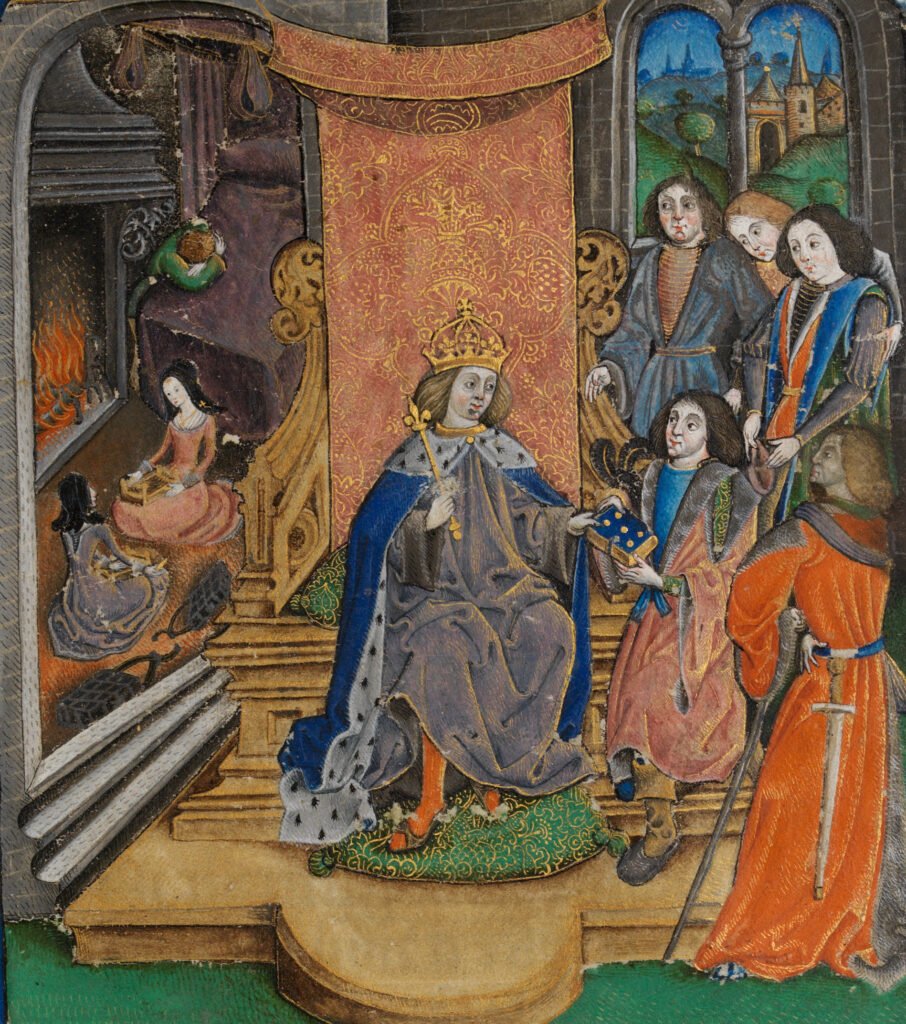
Elizabeth of York stands at the beginning of the Tudor story as both a Yorkist princess and the first Tudor queen consort. She was born on 11 February 1466 at the Palace of Westminster, the traditional heart of English royal government and ceremony. Her birth took place during the reign of her father, Edward IV, in a period of relative Yorkist stability. She died on her thirty seventh birthday, 11 February 1503, in the Tower of London, shortly after the birth of a daughter who did not survive. The Tower, which would later become notorious as a place of imprisonment and execution for several of her descendants and successors, was in her case a royal residence where she had gone for her confinement. Her life therefore began in the palace that symbolised royal authority and ended within the fortress that would come to represent both power and danger for the women of the dynasty she helped to found.
The Daughters of Henry VII
Margaret Tudor, the elder surviving daughter of Henry VII and Elizabeth of York, was born on 28 November 1489 at Westminster Palace. Like her mother, she entered the world at the centre of English political life. Her later years, however, were spent in Scotland after her marriage to James IV. She died on 18 October 1541 at Methven Castle, a residence in Perthshire that lay far from the English court of her childhood. Her death in Scotland marked the physical distance she had travelled as a Tudor princess who became a Scottish queen and later a dowager struggling with the complex politics of her adopted country.
Her younger sister, Mary Tudor, often known as Mary Rose to distinguish her from her niece, was born on 18 March 1496 at Richmond Palace. Richmond had been developed by Henry VII as a favoured residence, and Mary’s birth there placed her within the newer architectural and ceremonial world the first Tudor king was creating. She died on 25 June 1533 at Westhorpe Hall in Suffolk, the country house she occupied with her second husband, Charles Brandon, Duke of Suffolk. After the brief and glittering episode of her marriage to Louis XII of France, Mary returned to England and spent her final years in relative withdrawal from the court of her brother Henry VIII. Westhorpe represented a quieter, more private end to a life that had once been the focus of intense international diplomacy.
Catherine of Aragon
Catherine of Aragon was born on 16 December 1485 at the Archbishop’s Palace in Alcalá de Henares, a town near Madrid in the kingdom of Castile. Her birth took place in the vibrant intellectual and political world created by her parents, Isabel of Castile and Fernando of Aragon. She arrived in England in 1501 as a Spanish infanta and spent more than three decades in the country. She died on 7 January 1536 at Kimbolton Castle in Huntingdonshire. By the time of her death she had been living in increasing isolation after the annulment of her marriage to Henry VIII. Kimbolton, a moated house far from London, stood in stark contrast to the royal palaces she had once occupied as princess and queen. The journey from Alcalá de Henares to Kimbolton encapsulates the long displacement that defined much of her adult life.
Anne Boleyn
The exact birthplace of Anne Boleyn remains a matter of historical debate. Most scholars place her birth around 1501, either at Blickling Hall in Norfolk or at Hever Castle in Kent, both properties associated with the Boleyn family. The uncertainty surrounding the location of her birth stands in sharp contrast to the precise and grim circumstances of her death. She was executed on 19 May 1536 on Tower Green within the Tower of London. She was the first English queen consort to be put to death, and the Tower, which had once served as a royal residence, became in her case a place of final judgement and execution. The ambiguity of her origins and the terrible clarity of her end form one of the most striking contrasts among the Tudor queens.
Jane Seymour
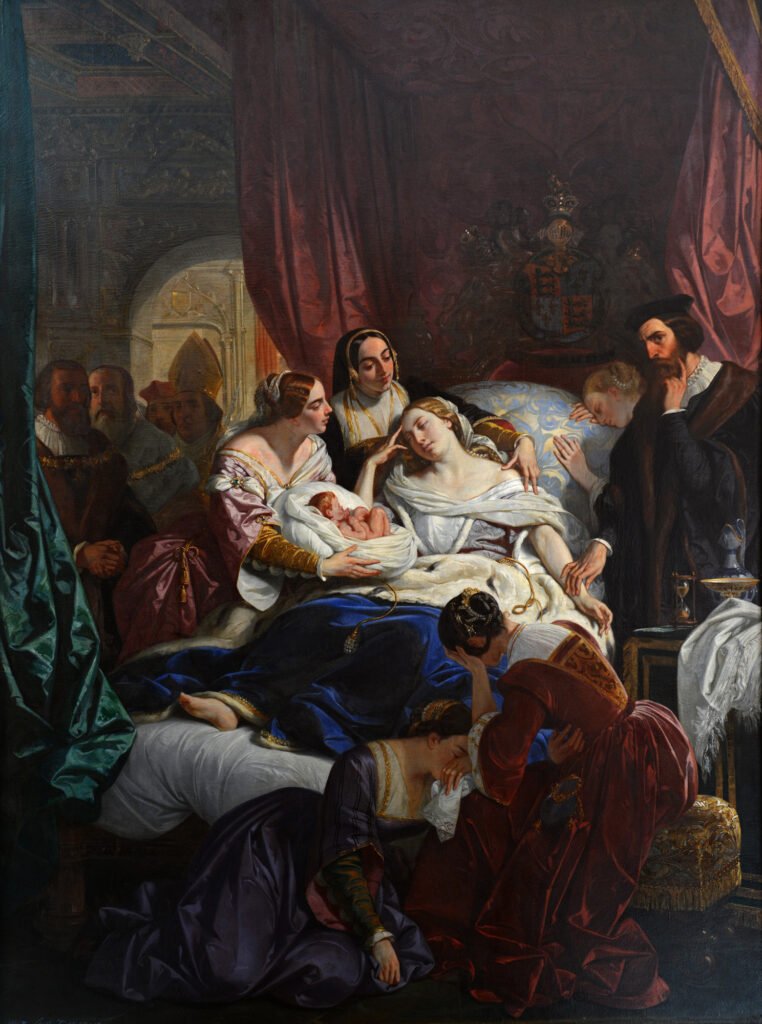
Jane Seymour was born around 1508 at Wulfhall in Wiltshire, the principal seat of the Seymour family. Wulfhall was a substantial manor house rather than a royal palace, and Jane’s birth there reflected the status of a well connected but not yet preeminent gentry family. She died on 24 October 1537 at Hampton Court Palace, twelve days after the birth of her son, the future Edward VI. Hampton Court, transformed by Henry VIII into one of the most magnificent royal residences in England, provided the setting for both the longed for arrival of a male heir and the death of the queen who had provided him. Jane’s movement from a Wiltshire manor to one of the great Thames-side palaces illustrates the rapid elevation of her family through her marriage.
Anne of Cleves
Anne of Cleves was born on 28 June 1515, or according to some sources on 22 September of the same year, in Düsseldorf, the principal city of the Duchy of Cleves. Her birth placed her within the political world of the Holy Roman Empire and the German principalities. She came to England in 1540 for her marriage to Henry VIII and remained in the country after the annulment of that marriage. She died on 16 July 1557 at Chelsea Old Manor in London. Of all Henry VIII’s wives, Anne lived the longest after the end of her marriage and died in relative comfort and security. Chelsea, then a riverside residence outside the main centres of court life, provided a peaceful final setting that contrasted with the turbulent experiences of several of her predecessors.
Katherine Howard
According to the research of historian Gareth Russell, Katherine Howard was most likely born in 1522, or possibly late 1521, in the parish of Lambeth. Russell’s work challenges the once popular theory that she was born as late as 1525, a date that would have made her only fourteen or fifteen at the time of her marriage. Drawing on the testimony of the French ambassador Charles de Marillac, who knew her personally and reported that she was about eighteen when she debuted at court in late 1539, together with evidence from family wills and the ages of the other young women who entered royal service at the same time, Russell concludes that 1522 is the most probable year. This would have made her approximately nineteen when she married Henry VIII in July 1540 and around twenty or twenty one at the time of her death. She died on 13 February 1542 in the Tower of London after being convicted of treason. The same fortress that had claimed her cousin Anne Boleyn six years earlier became the place of her own execution. Lambeth, where the Howard family maintained significant properties, and the Tower of London thus mark the beginning and the end of her short and tragic life.
Katherine Parr
Katherine Parr was born in 1512 at the family’s house in the Blackfriars district of London. Her birth in the city placed her within the commercial and residential world of the capital rather than in a distant country estate. She died on 5 September 1548 at Sudeley Castle in Gloucestershire from complications following the birth of her daughter, Mary Seymour, the child of her marriage to Thomas Seymour. Sudeley, a handsome castle in the Cotswolds, was the home she shared with her final husband. Her death there, far from the court where she had once been queen, marked the end of a life that had spanned multiple marriages and a significant period of influence as the last wife of Henry VIII.
Mary I
Mary I, the first woman to be crowned queen regnant of England, was born on 18 February 1516 at Greenwich Palace. Greenwich had long been a favoured royal residence and was the site of many important Tudor events. She died on 17 November 1558 at St James’s Palace in London. Both her birth and her death occurred within the network of royal houses that stretched along the Thames. This continuity of location underscores her lifelong connection to the ceremonial and political centres of the Tudor monarchy, even during the years when her status as heir was uncertain or denied.
Elizabeth I
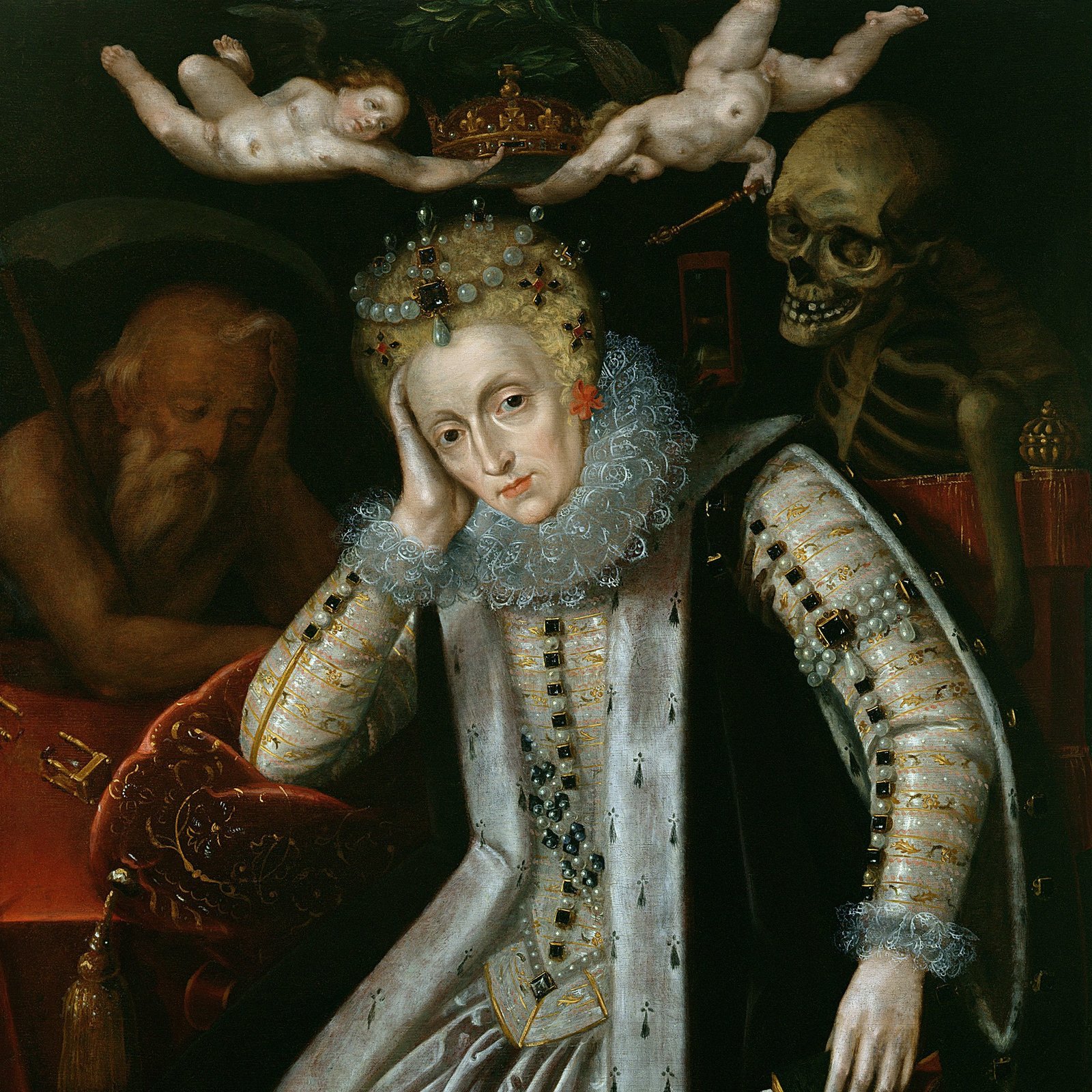
Elizabeth I was born on 7 September 1533 at Greenwich Palace, the same residence where her half sister Mary had been born seventeen years earlier. The choice of Greenwich for her birth linked her from the beginning to the established pattern of Tudor royal life. She died on 24 March 1603 at Richmond Palace, a house that had been one of her favourite residences in her later years. Richmond, originally developed by her grandfather Henry VII, provided a fitting final setting for the last Tudor monarch. Her long life therefore began and ended in royal palaces that had witnessed many of the dynasty’s most significant moments, from the early hopes of Henry VII to the final quiet hours of the Elizabethan age.
Lady Jane Grey: A Symbolic Inclusion
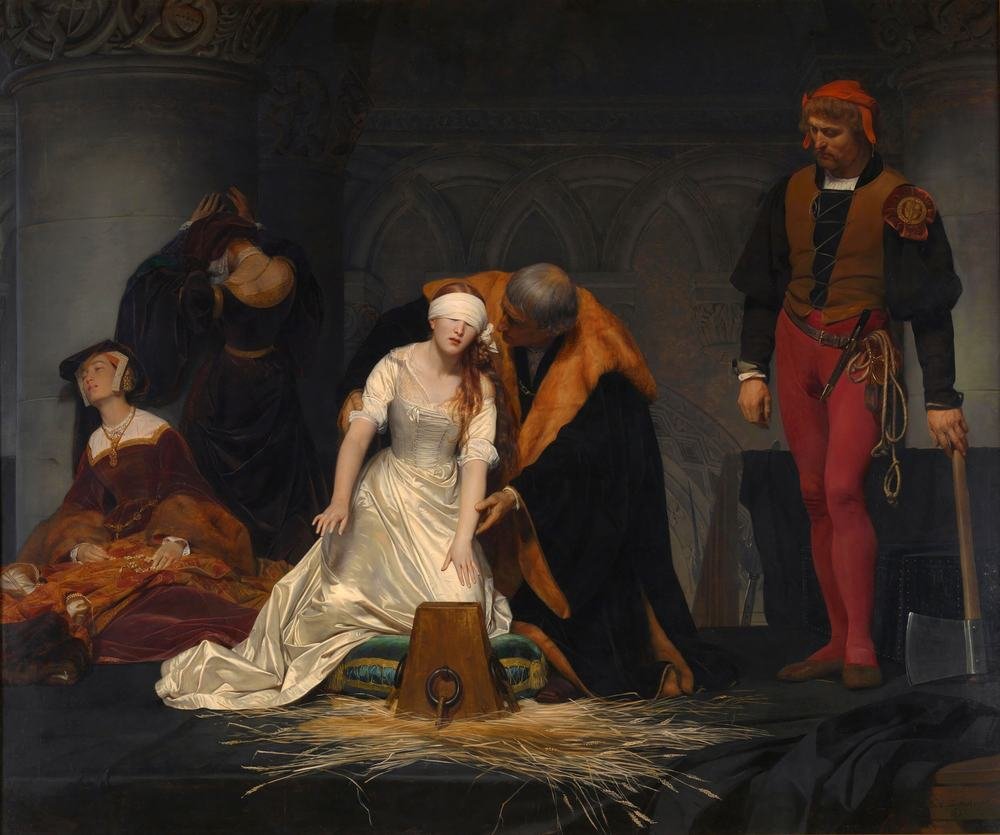
Lady Jane Grey is included in this survey only in a symbolic capacity. She was never crowned, and her proclamation as queen lasted just nine days before the accession of Mary I. She was born in October 1537 at Bradgate Park in Leicestershire, the seat of the Grey family. She died on 12 February 1554 in the Tower of London after being convicted of high treason. Although she stands outside the formal sequence of crowned Tudor queens, the locations of her birth and death connect her to the same geographical and political world. Bradgate represents the world of the high nobility from which several Tudor consorts also came, while the Tower links her fate to that of Anne Boleyn and Katherine Howard.
Patterns of Place Across the Dynasty
When these birthplaces and death places are considered together, several clear patterns emerge. The great royal palaces along the Thames, including Westminster, Greenwich, Richmond, Hampton Court and St James’s, dominate the records of those women who were born or who died closest to the centre of power. The Tower of London appears repeatedly as a place of death for those who fell from favour or who posed a political threat. Foreign birthplaces, specifically Alcalá de Henares and Düsseldorf, mark the two queens who came to England from abroad and who carried different cultural traditions with them. English country houses and castles, such as Wulfhall, Kimbolton, Sudeley, Methven, Westhorpe and Bradgate, record both the more modest origins of certain English born consorts and the quieter or more isolated circumstances in which several of these women ended their lives.
These locations form a physical archive of the Tudor queens’ experiences. They show the movement from foreign courts to English palaces, from gentry manors to royal residences, and from positions of influence to places of confinement or retreat. The map of their births and deaths is also a map of the dynasty’s rise, consolidation, crises and eventual end. In the stones of Westminster, the chambers of Greenwich, the walls of the Tower, and the quieter spaces of Kimbolton, Sudeley and Chelsea, the lives of these women remain inscribed on the landscape of Tudor history.
Table of Birthplaces and Death Places
| Name | Birthplace | Birth Date | Death Place | Death Date |
|---|---|---|---|---|
| Elizabeth of York | Westminster Palace | 11 February 1466 | Tower of London | 11 February 1503 |
| Margaret Tudor | Westminster Palace | 28 November 1489 | Methven Castle, Scotland | 18 October 1541 |
| Mary Tudor (Mary Rose) | Richmond Palace | 18 March 1496 | Westhorpe Hall, Suffolk | 25 June 1533 |
| Catherine of Aragon | Alcalá de Henares, Spain | 16 December 1485 | Kimbolton Castle | 7 January 1536 |
| Anne Boleyn | Blickling Hall or Hever Castle (uncertain) | c. 1501 | Tower of London | 19 May 1536 |
| Jane Seymour | Wulfhall, Wiltshire | c. 1508 | Hampton Court Palace | 24 October 1537 |
| Anne of Cleves | Düsseldorf | 28 June 1515 (or 22 September 1515) | Chelsea Old Manor | 16 July 1557 |
| Katherine Howard | Possibly Lambeth or Norfolk (uncertain) | c. 1521/1522 | Tower of London | 13 February 1542 |
| Katherine Parr | Blackfriars, London | 1512 | Sudeley Castle | 5 September 1548 |
| Mary I | Greenwich Palace | 18 February 1516 | St James’s Palace | 17 November 1558 |
| Elizabeth I | Greenwich Palace | 7 September 1533 | Richmond Palace | 24 March 1603 |
| Lady Jane Grey (symbolic) | Bradgate Park, Leicestershire | October 1537 | Tower of London | 12 February 1554 |
References:
Earenfight, Theresa. Catherine of Aragon: Infanta of Spain, Queen of England.
Ives, Eric. The Life and Death of Anne Boleyn.
Loades, David. Mary Rose: Tudor Princess, Queen of France, the Extraordinary Life of Henry VIII’s Sister.
Norton, Elizabeth. Anne of Cleves: Henry VIII’s Discarded Bride.
Norton, Elizabeth. Jane Seymour: Henry VIII’s True Love.
Porter, Linda. Katherine the Queen: The Remarkable Life of Katherine Parr.
Porter, Linda. The Thistle and the Rose: The Extraordinary Life of Margaret Tudor.
Russell, Gareth. Research on the age and birth of Katherine Howard, as discussed in “New research reveals the true age of Catherine Howard” (Royal History Geeks, 2021) and in his biography Young and Damned and Fair: The Life and Tragedy of Catherine Howard at the Court of Henry VIII.
Somerset, Anne. Elizabeth I.
Tallis, Nicola. Crown of Blood: The Deadly Inheritance of Lady Jane Grey.
Weir, Alison. Elizabeth of York: A Tudor Queen and Her World.
Additional standard biographical and chronological details drawn from the collective scholarship on the Tudor queens consort, the daughters of Henry VII, and Lady Jane Grey.