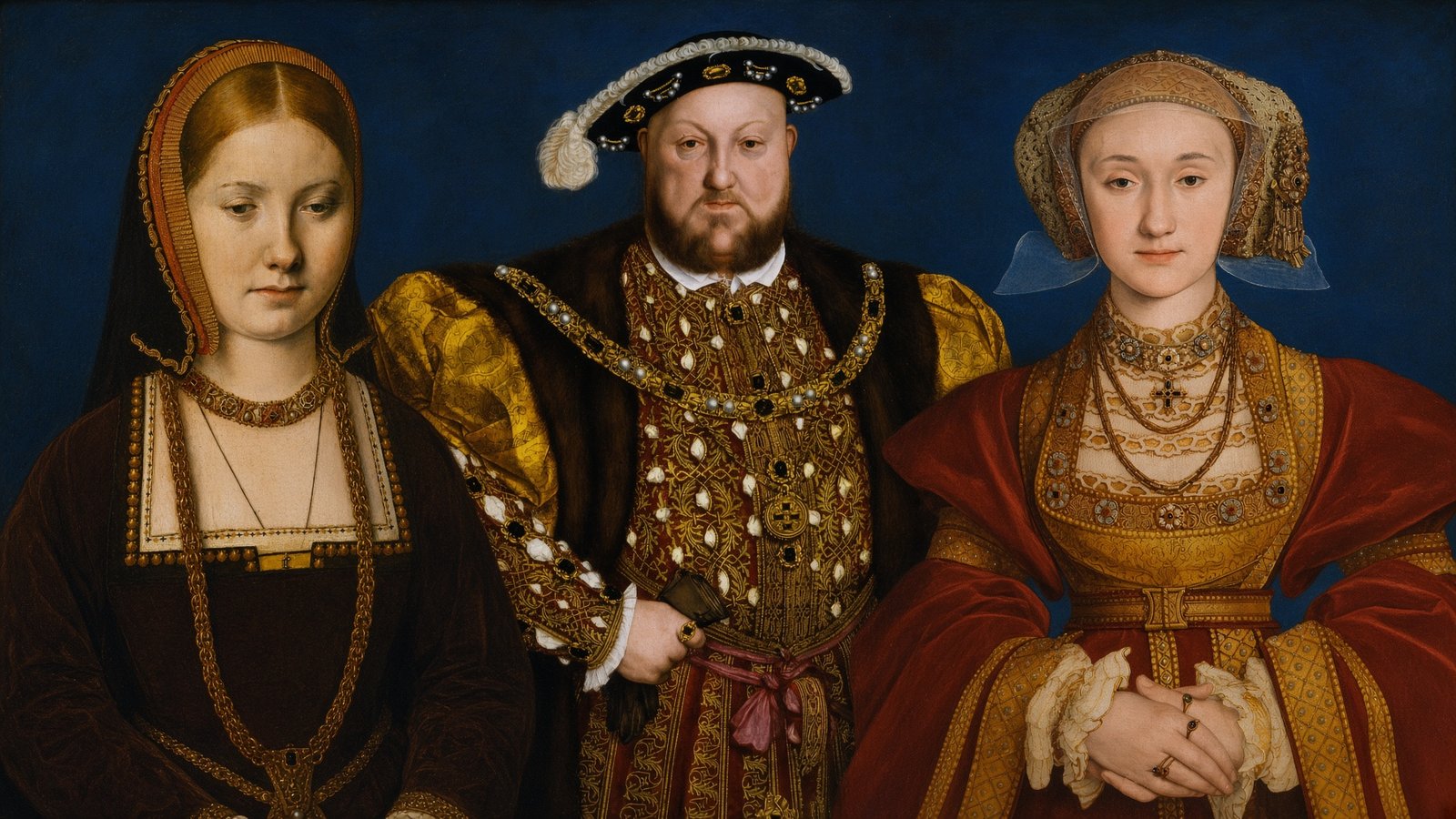
Henry’s Love of Theatrical Gestures
Henry VIII delighted in theatrical gestures. Throughout his youth and early reign he enjoyed elaborate masques, sudden appearances and romantic pranks. One of the most famous of these was the morning in 1510 when he and a dozen companions burst into Queen Catherine of Aragon’s chamber dressed as outlaws. Thirty years later he tried a similar surprise with Anne of Cleves. The first episode strengthened a marriage. The second helped destroy one.
The Robin Hood Surprise with Catherine of Aragon

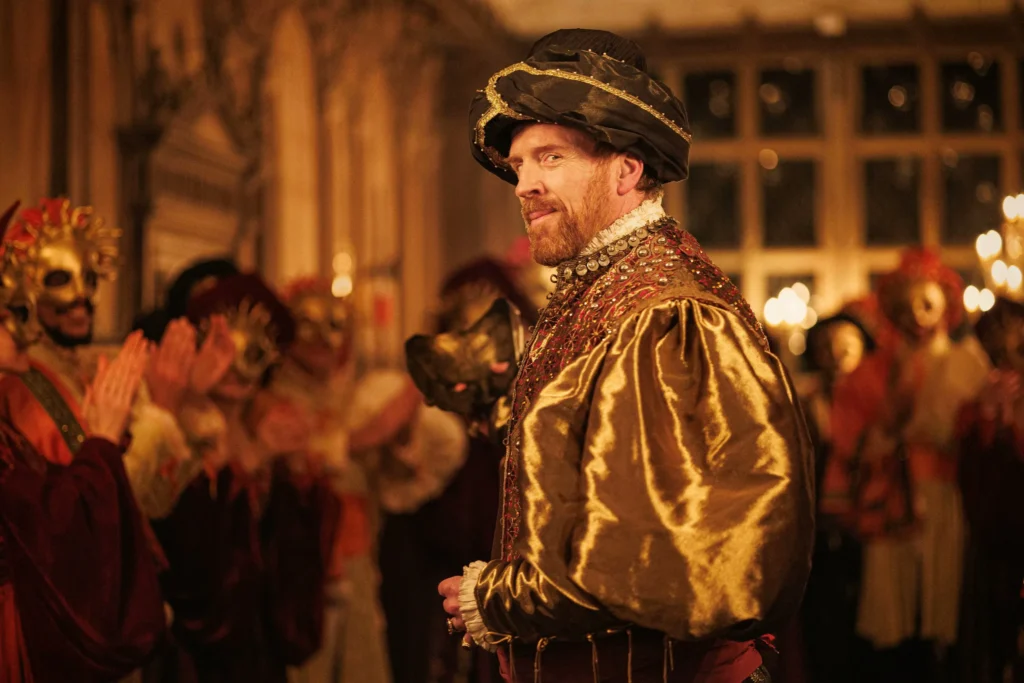
In the early years of their marriage Henry and Catherine still shared a lively and affectionate court. According to Antonia Fraser, Giles Tremlett and Theresa Earenfight, one morning in 1510 the queen was sitting with her ladies when a band of men suddenly entered her chamber. They wore short hooded coats of coarse green Kentish Kendal cloth, carried bows, arrows, swords and bucklers, and looked exactly like outlaws or Robin Hood’s men.
Catherine and her ladies were abashed by the strange sight and the sudden intrusion. Yet the queen recovered quickly. With presence of mind the ladies chose to dance with the strangers rather than have them thrown out. When the men removed their disguises they were revealed as the king and his young esquires. Henry then asked his wife if the ladies dared venture into the wood with so many outlaws. Catherine replied, in the words of a good wife, that if it pleased him then she was content. The surprise ended in laughter, dancing and an impromptu party.
The episode shows a young, athletic Henry still capable of light-hearted romance. Catherine understood the game, played along, and turned the invasion into shared amusement. The prank became a fond memory of their early married life.
The Failed Surprise at Rochester with Anne of Cleves
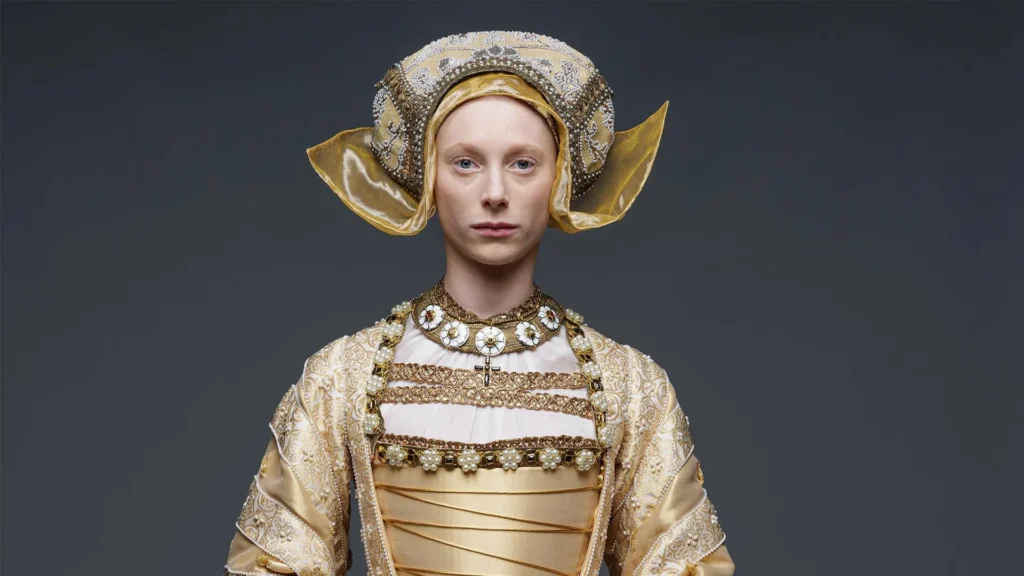
Three decades later the same king attempted a comparable gesture with a very different result. On New Year’s Day 1540 Henry rode in secret to Rochester, where Anne of Cleves was resting on her journey to London. He went disguised with five gentlemen of the privy chamber, wearing mottled cloaks and hoods. His intention was romantic. He wished to nourish love by seeing his bride before the formal public meeting, just as he had once surprised Catherine.
Anne was standing at a window watching a bull baiting in the courtyard. Henry entered, embraced her, kissed her and offered a New Year’s gift of rich sables. Anne, who spoke little English and had never seen the king, did not recognise the stranger. She thanked him politely but continued to look out of the window, giving him only limited attention.
The contrast with Catherine’s reaction could not have been sharper. Where Catherine had shown quick wit and good humour, Anne showed polite indifference. Henry’s pride was wounded. He left the room, removed his disguise, put on a coat of purple velvet and returned. Only then did Anne understand who he was. They spoke with the help of interpreters, but the damage was already done.
Henry’s Reaction and the Unpresented Gift
That night the king stayed at Rochester. The next morning he could not bring himself to present the valuable furs in person. He ordered Sir Anthony Browne to deliver the gift and left as soon as the tide allowed. On the boat back to Greenwich he complained openly. Both Elizabeth Norton and Sarah-Beth Watkins record his words: “I see nothing in this woman as men report of her, and I marvel that wise men would make such a report as they have done.”
Later he gave a fuller account of his feelings: “When I saw her at Rochester, the first time that ever I saw her, it rejoiced my heart that I had kept me free from making any pact or bond before with her till I saw her myself; for then I assure you I liked her so ill, and so far contrary to that she was praised, that I was woe that ever she came into England.”
Why One Encounter Succeeded and the Other Failed
Several factors explain the difference between the two encounters. In 1510 Henry was still young, handsome and full of energy. Catherine already knew him well and shared his taste for courtly games. The Robin Hood disguise was playful rather than a serious test of recognition. Anne, by contrast, was a stranger. She came from a different culture, spoke a different language and had been raised in a more restrained household. She could not be expected to recognise a disguised foreign king or to respond with the same theatrical flair that Catherine had shown.
Physical attraction also played a decisive part. Henry had chosen Catherine years earlier and remained drawn to her. With Anne he felt none. The French ambassador Marillac noted that she was “not so young as was expected, nor so beautiful as everyone affirmed.” Henry, now forty-eight, heavy and no longer the athletic prince of his youth, found no desire for her. The failed recognition at the window merely confirmed a deeper lack of interest.
The Lasting Consequences
The Robin Hood episode with Catherine became a charming anecdote of a happy early marriage. It illustrated mutual understanding and shared humour. The Rochester meeting with Anne produced the opposite effect. From that day Henry regarded the marriage as a burden. He went through the public ceremonies and the wedding itself only because political necessity left him no choice. The union remained unconsummated and was annulled six months later.
Thomas Cromwell, who had arranged the Cleves match, paid for the failure with his life. Anne, showing the dignity that Catherine had once displayed in very different circumstances, accepted the annulment and lived the rest of her life in England as the king’s beloved sister.
A King Transformed
The two surprises reveal how much Henry himself had changed. The young king who burst into Catherine’s chamber as Robin Hood still believed in romantic gestures and found a partner who answered in kind. The middle-aged king who tried the same approach with Anne of Cleves discovered only disappointment. What had once been a successful game of love became, thirty years later, the moment when hope collapsed. The contrast between the two meetings marks the distance between the vibrant early years of Henry’s first marriage and the weary calculation of his fourth.
References
Fraser, Antonia. The Wives of Henry VIII. Tremlett, Giles. Catherine of Aragon: Henry’s Spanish Queen. Earenfight, Theresa. Catherine of Aragon: Infanta of Spain, Queen of England. Norton, Elizabeth. Anne of Cleves: Henry VIII’s Discarded Bride. Watkins, Sarah-Beth. Anne of Cleves: Henry VIII’s Unwanted Wife.
Read also: Jane Seymour and the Queen She Served: Admiration for Catherine of Aragon – VERITAS TEMPORIS FILIA