A King’s Impatience
In November 1501, after years of negotiation, repeated delays and careful diplomacy, the Spanish princess Catherine of Aragon finally reached English soil. She had landed at Plymouth in early October and made a slow, ceremonial progress eastward through the southern counties. Along the route she was greeted by local dignitaries, civic processions and crowds of ordinary people who turned out to see the foreign bride destined for their Prince of Wales. King Henry VII, who had invested substantial political capital and a carefully calculated dowry in the alliance with Spain, grew increasingly restless while waiting at Richmond Palace. At the last moment he decided not to receive his future daughter-in-law there as originally arranged. Instead he set out to meet her on the road, taking with him his elder son and heir, Prince Arthur. The place chosen for this first encounter was the palace of the Bishop of Bath at Dogmersfield in Hampshire, roughly forty miles from London.
Henry’s decision revealed both personal eagerness and political calculation. For more than a decade he had corresponded with Ferdinand and Isabella about this marriage. He had received painted portraits, written descriptions and ambassadorial reports, yet none of these substitutes could fully satisfy him. Like many rulers of his age, he believed that physical appearance offered important clues to health, fertility and moral character. A princess who looked robust, clear-skinned and attractive was more likely, in contemporary thinking, to produce healthy heirs and to reflect credit on the dynasty that received her. Henry therefore wished to see Catherine with his own eyes before the final religious ceremonies bound her irrevocably to his son and to the English crown. The long years of waiting, the complicated financial arrangements, and the strategic importance of the Spanish alliance all made this visual confirmation necessary.

Spanish Custom Confronts English Authority
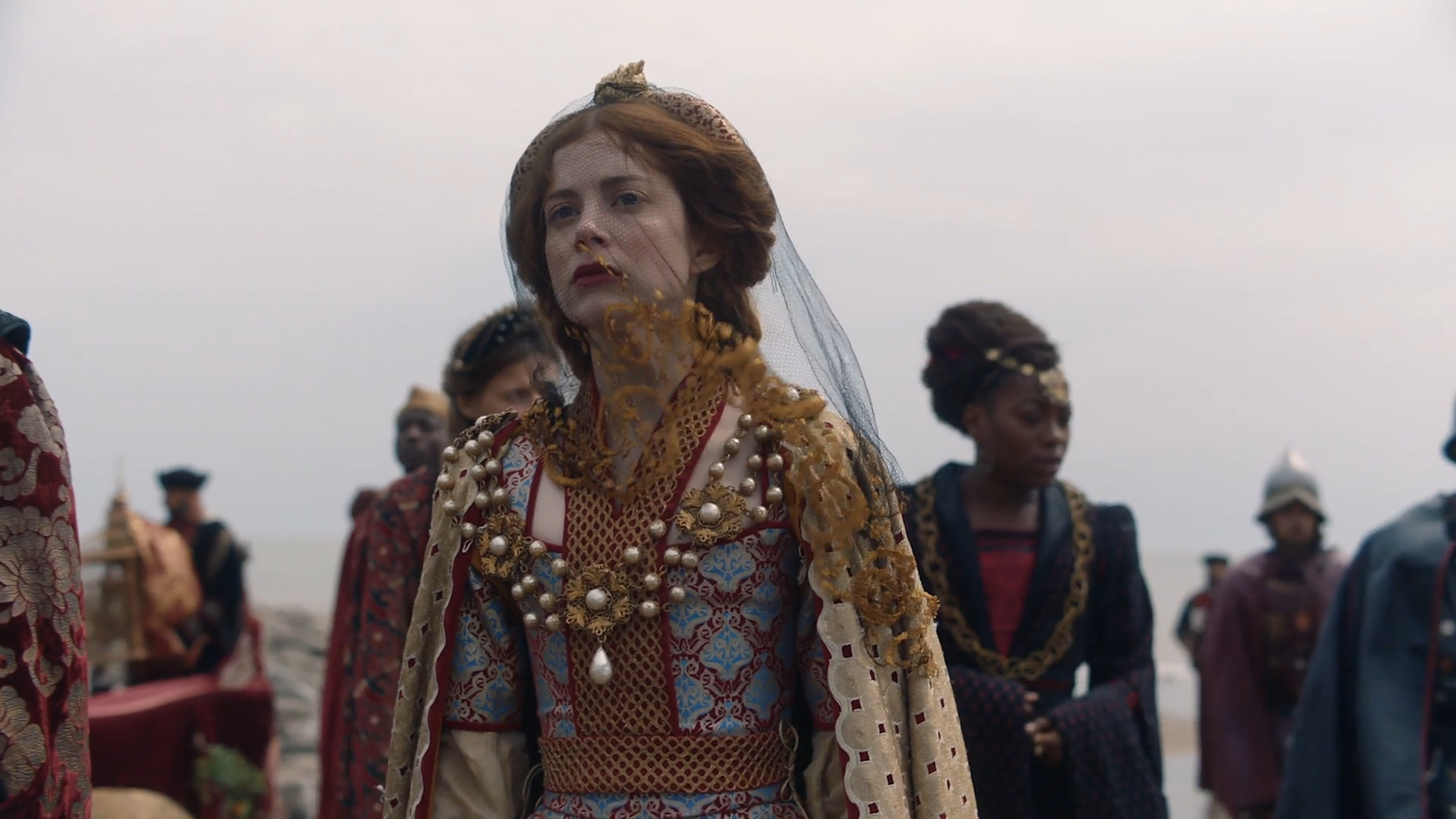
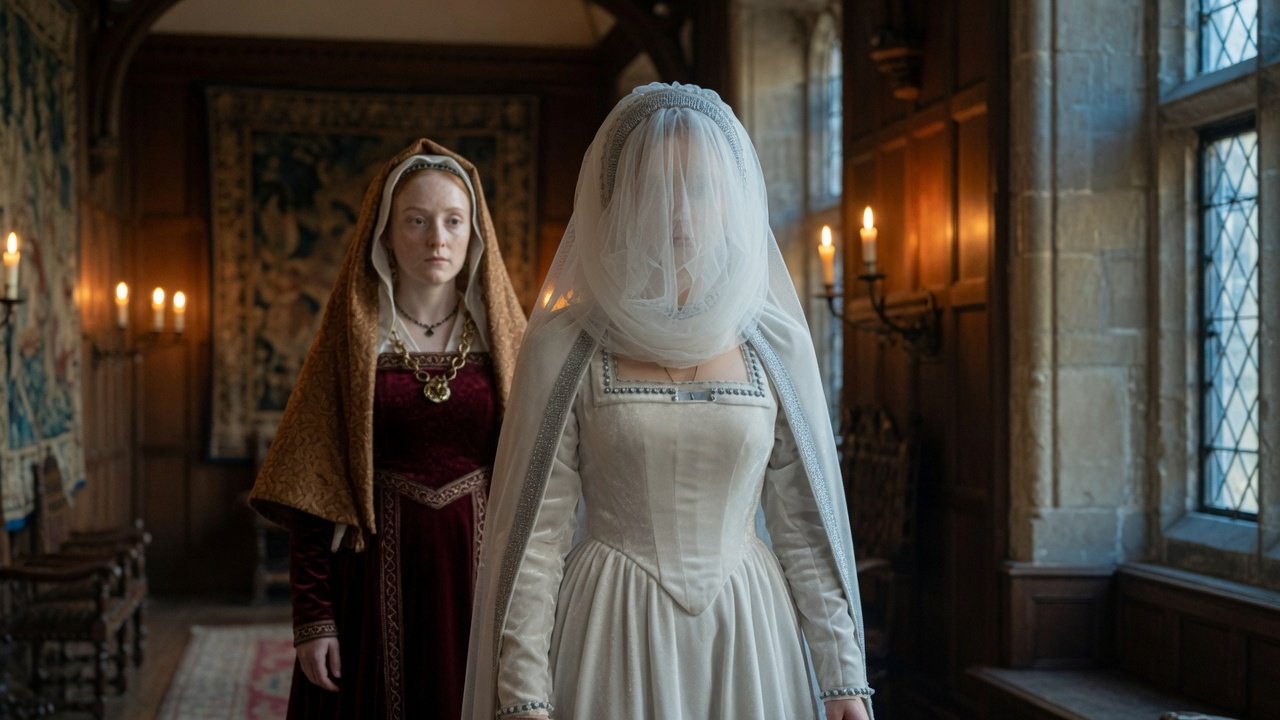
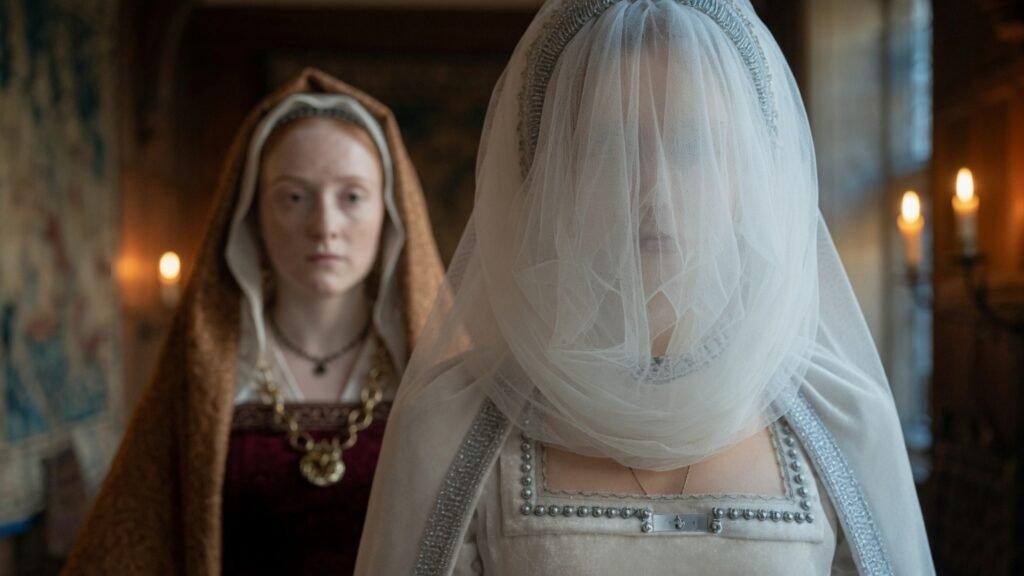
When the king and the prince arrived at Dogmersfield, they met an unexpected and firm obstacle. Catherine’s household travelled under the strict supervision of Doña Elvira Manuel, a formidable Spanish noblewoman whom Queen Isabella had appointed as First Lady of Honour and First Lady of the Bedchamber. Doña Elvira held a position of great authority within the princess’s entourage. She informed the English party that the princess could not be personally inspected. According to Castilian custom, a high-born bride remained veiled before both her future husband and her husband’s father until the solemn religious benediction of the marriage had taken place. The veil served as a mark of modesty, dignity and the formal distance that proper etiquette required until the union was blessed by the Church.
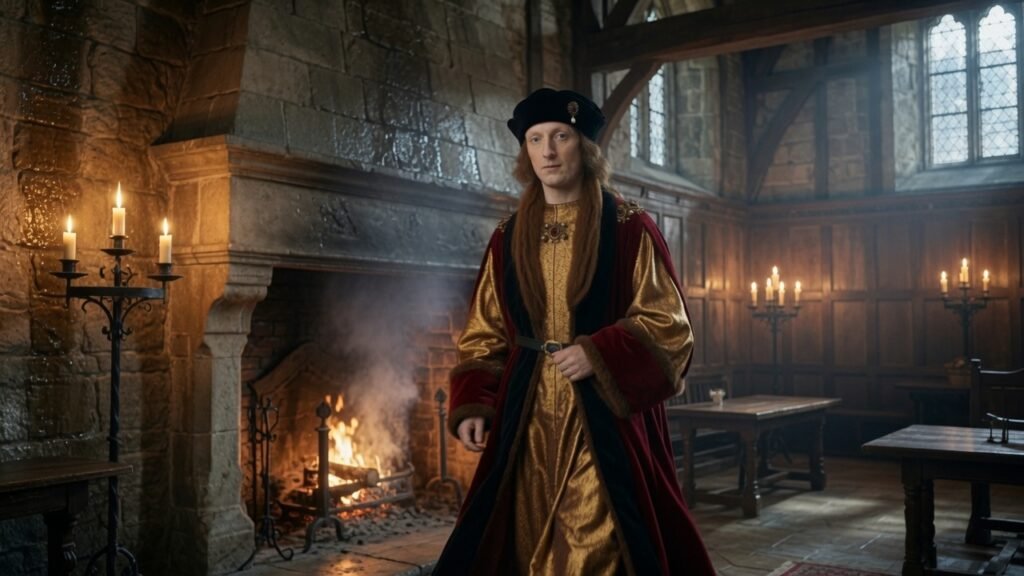
Henry VII rejected the argument without hesitation. Catherine, he pointed out, was already styled Princess of Wales by virtue of the marriage treaty and the proxy ceremonies that had preceded her journey. She was therefore an English subject, and the customs of Castile, however respectable in Spain, carried no legal force in England. An impasse followed. On one side stood the victor of Bosworth Field, a monarch who had spent sixteen years consolidating his hold on the English throne and who was not accustomed to being refused on a matter he regarded as his right. On the other side stood Doña Elvira, determined to uphold the instructions and traditions of the Spanish court that had entrusted the princess to her care. The confrontation was sharp, public within the limited circle of attendants, and laden with the larger question of whose protocol would govern the young woman’s new life.
The Lifting of the Veil
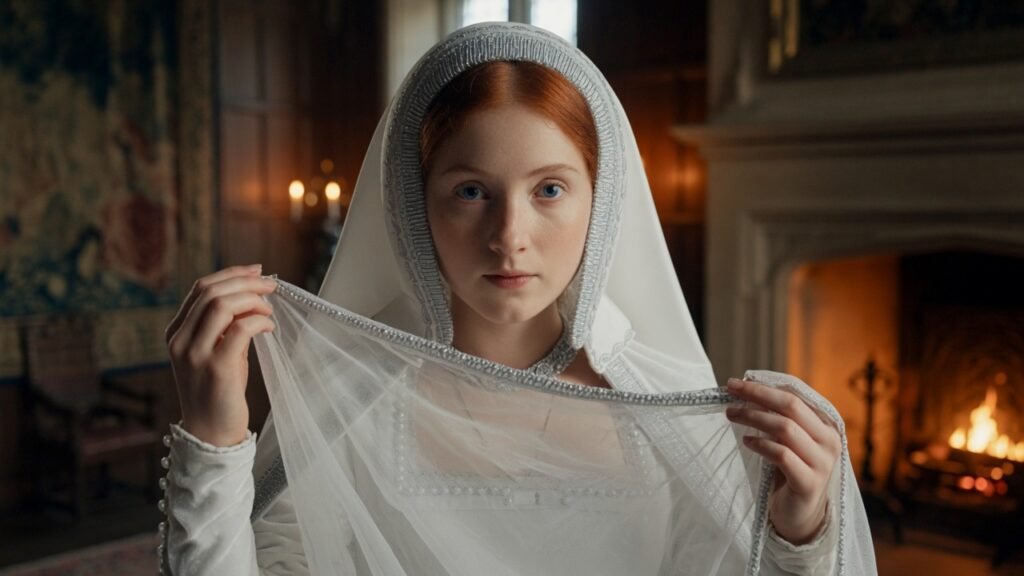
In the end the dispute was resolved in favour of English practice and Henry’s insistence. The veil was lifted. Catherine, then on the eve of her sixteenth birthday, curtsied deeply before the king in a clear gesture of obedience and respect. Henry examined the face now revealed to him and found himself both relieved and genuinely pleased. There had been no deception, no unfortunate surprise of the kind that sometimes accompanied royal brides summoned from distant courts. The princess possessed a fair complexion, with the naturally pink cheeks and clear skin that English observers of the period particularly admired. In an age when artificial cosmetics were often clumsy, easily detected and widely scorned, an unpainted and healthy appearance carried special value. Her manners seemed agreeable, composed and dignified. The king declared that he much admired her beauty as well as her deportment.
Prince Arthur followed his father’s lead with appropriate enthusiasm. In a letter written to Ferdinand and Isabella a few weeks later, he claimed that he had never felt so much joy in his life as when he beheld the sweet face of his bride. Even allowing for the polite exaggeration expected in diplomatic correspondence between royal houses, the reaction of both father and son indicates that Catherine made a favourable first impression. The years of negotiation, the carefully measured dowry payments, and the long sea and land journey from Spain had produced a young woman who satisfied the visual and social expectations of the Tudor court at the moment of first meeting.
The Deeper Meaning of the Encounter
The meeting at Dogmersfield was far more than a private family inspection. It marked the precise point at which Catherine of Aragon passed from Spanish protection into the English political and ceremonial world. The lifting of the veil became a symbolic act. It represented the victory of English requirements over Castilian custom and the moment when the princess’s identity began to shift. She remained the daughter of Isabella of Castile and Ferdinand of Aragon, yet she was now also the visible Princess of Wales, accessible to the English royal family and subject to their expectations.
The episode also reveals Henry VII’s characteristic mixture of caution, determination and practical judgment. He had not been content to rely solely on the reports of ambassadors or on the flattering conventions of portraiture. He had ridden out to see the bride for himself, and once present he had refused to be constrained by foreign protocol. At the same time, his evident pleasure in Catherine’s appearance shows that the inspection was not purely cold or mercenary. The king who had spent his reign securing the Tudor succession through careful finance, calculated marriages and watchful suppression of rivals allowed himself a moment of real satisfaction when the long-awaited bride proved healthy, well-mannered and pleasing to the eye.
Catherine’s Position in the Drama
For Catherine herself the experience must have been both awkward and highly significant. She had been raised in the formal etiquette of the Spanish court, where the veil formed part of the proper conduct expected of a royal bride before her marriage. To have that protection removed at the direct insistence of a foreign king, in the presence of the young man she was about to marry, placed her at the centre of a small but intense diplomatic confrontation. Her deep curtsey after the veil was lifted was an act of political intelligence as well as personal courtesy. It signalled her acceptance of the new authority under which she would now live and her willingness to adapt to English expectations.
The favourable impression she created helped to ease the remaining stages of her reception. Within days the formal entry into London took place amid elaborate pageantry, followed by the magnificent marriage ceremony at St Paul’s Cathedral on 14 November 1501. The private doubts that Henry VII had carried with him to Dogmersfield had been set to rest by the evidence of his own eyes. The princess from Spain was no longer a distant figure described in letters, measured in dowry instalments, and portrayed in carefully managed likenesses. She was a living presence whose face the king had seen, judged and approved.
A Moment That Defined the Alliance
The confrontation over the veil at Dogmersfield stands as one of the most vivid and human episodes in the early history of the Tudor alliance with Spain. It captures Henry VII in a rare moment of open impatience and personal insistence, Doña Elvira Manuel in determined defence of her mistress’s dignity and the customs of her own court, and Catherine of Aragon herself at the exact threshold of her English life. The lifting of the veil resolved a practical dispute over protocol, yet it also enacted a deeper transfer of the princess from one court culture to another. In the bishop’s palace in Hampshire, on a late autumn day in 1501, the long-planned marriage alliance became immediate and real. The king had seen his son’s bride without intermediary or concealment, and he was content with what he found. From that moment the Spanish infanta began her transformation into the English Princess of Wales, a transformation that would shape the rest of her long and often difficult life in her adopted country.
Reference
Fraser, Antonia. The Wives of Henry VIII.