A Beaufort Heiress in Turbulent Times
Margaret Beaufort was born on 31 May 1443 at Bletso in Bedfordshire, a manor that belonged to her mother, Margaret Beauchamp of Bletso. She was the only child of John Beaufort, Duke of Somerset, and from the moment of her birth she stood as one of the greatest heiresses in England. Her father, already a man of significant rank and royal blood through his descent from John of Gaunt and Katherine Swynford, died only weeks after her arrival in the world. His death left the infant Margaret in possession of vast estates and a political importance that far exceeded her years. Elizabeth Norton’s biography makes clear that Margaret’s earliest existence was shaped by the precarious fortunes of the Beaufort family and by the growing instability of the Lancastrian regime under the young and ineffective Henry VI.
Few intimate details of her daily childhood survive, yet the broader outlines are firm. She was raised chiefly by her mother at Bletso and at another Beauchamp property, Maxey. Margaret Beauchamp had been married before and brought children from her previous union into the household, so the young Margaret grew up among half-siblings in an environment of gentry comfort, relative security and the education appropriate to her rank. As the sole heir to her father’s great lands, she was from the beginning a prize of the highest value. In the medieval system of wardship the king controlled both the custody and the marriage of underage heiresses. Margaret’s future was therefore a matter of royal and factional calculation almost from the day she was born. Courtiers and great lords watched her inheritance with open interest, knowing that whoever secured her marriage would gain not only wealth but a direct connection to the royal blood of Lancaster.
The First Marriage: A Child of Six
In the mid-1440s the powerful William de la Pole, Duke of Suffolk, obtained control of Margaret’s wardship and marriage. Suffolk was then the dominant figure at the court of Henry VI, and he intended to use the little heiress to strengthen his own family’s position. In a formal ceremony that took place when Margaret was only six years old and her bridegroom, John de la Pole, was eight, the two children were married. The union was never consummated and the couple never lived together as husband and wife. Margaret remained with her mother throughout the entire period of this nominal marriage.
Norton records that Margaret later referred to Edmund Tudor as her first husband, a statement that suggests she either did not fully comprehend the childhood ceremony or deliberately chose to set it aside in her own memory. The marriage was eventually dissolved after Suffolk’s dramatic fall from power and his murder in 1450. By 1453 Margaret was free of the obligation. The episode nevertheless reveals with painful clarity how completely the lives of great heiresses were treated as instruments of family ambition and political strategy. At an age when most children were still in the care of nurses and tutors, Margaret had already been bound by a marriage contract designed solely to advance the interests of others.
The Second Marriage to Edmund Tudor
In 1453 Henry VI granted Margaret’s wardship to his own half-brothers, Edmund and Jasper Tudor, the sons of Catherine of Valois and Owen Tudor. The king’s purpose was transparent. One of the brothers was to marry the wealthy young heiress and thereby secure her lands and her royal blood for the Tudor line. Edmund, the elder of the two, claimed the prize. The couple were married in 1455, when Margaret was twelve years old and Edmund was approximately twenty-four.
The marriage was consummated almost at once. Norton observes that this decision revealed an acquisitive and ruthless side of Edmund Tudor’s character. Under the law of the time a husband acquired a life interest in his wife’s estates once he had fathered a child by her. By consummating the union as soon as Margaret reached the legal age of twelve, Edmund secured his claim to her inheritance. Contemporaries regarded the early consummation as shocking and improper. Margaret was still physically immature, small in stature and underdeveloped for her years. Yet within months of the wedding she was pregnant.
The Dangerous Pregnancy
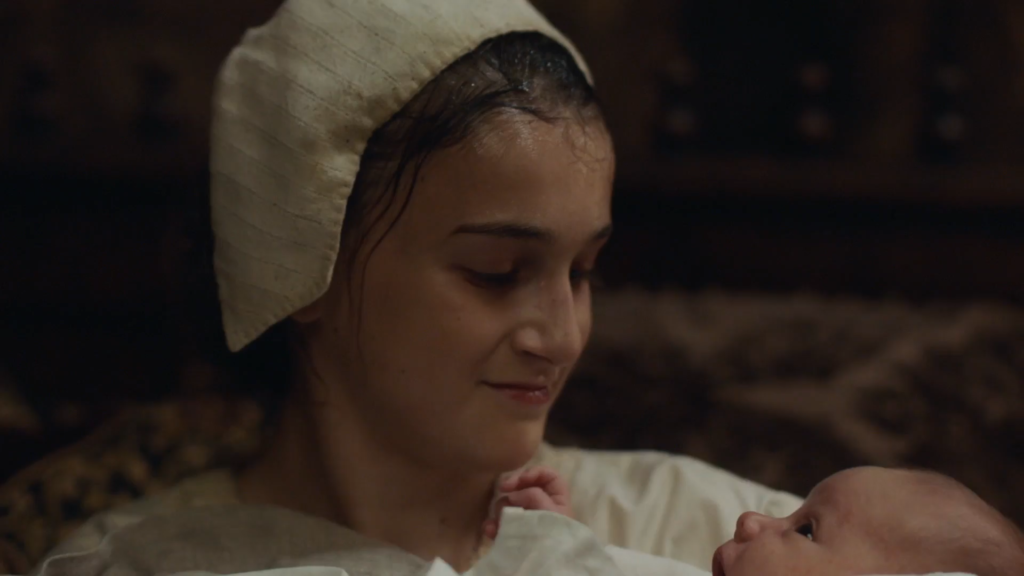
The pregnancy that followed proved difficult and frightening. Edmund Tudor was already absent in Wales on the king’s business when Margaret conceived, and in November 1456 he died of the plague or a related illness at Carmarthen. His death left his thirteen-year-old widow alone, far from her mother’s household, and carrying a child. Margaret later admitted that she had been terrified she would not survive the birth. She took refuge at Pembroke Castle under the protection of her brother-in-law Jasper Tudor, who proved a steadfast guardian in the months that followed.
Throughout the winter of 1456 and early 1457 Margaret waited in the fortress. The physical risks of childbirth for a girl of her age and slight build were well understood even in the fifteenth century. Medical knowledge was limited, and the possibility of death for both mother and child was real and immediate. Norton emphasises the isolation and anxiety of those months. Margaret had lost her husband before she had ever truly known him as a companion, and she now faced the ordeal of labour with only the support of Jasper and the household at Pembroke.
The Birth of Henry Tudor
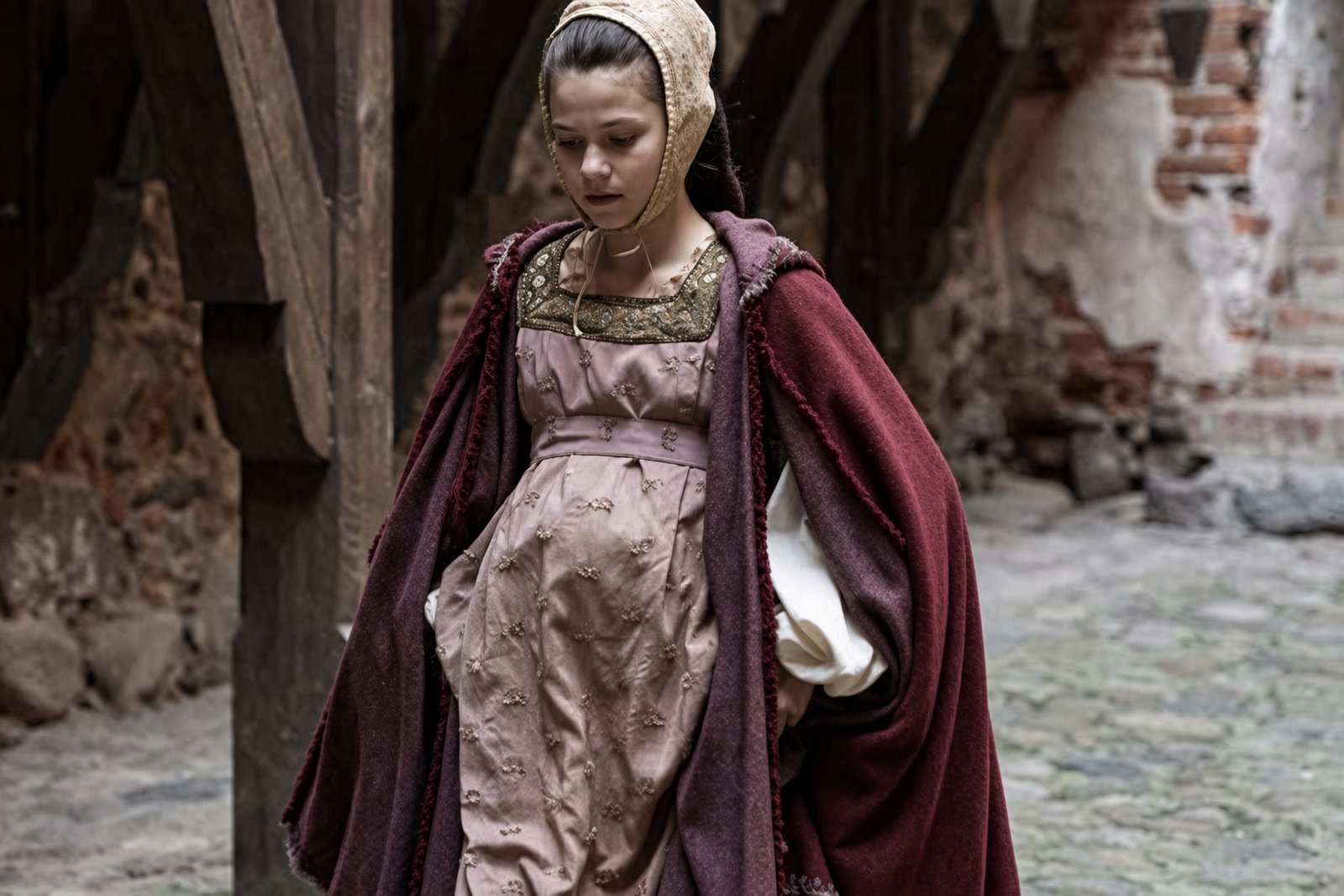
On 28 January 1457, more than three months after Edmund’s death, Margaret gave birth to a son. The labour was long, hard and dangerous. She was still only thirteen years old, and her body was not fully prepared for the demands of childbirth. The experience left permanent damage. Margaret would never conceive again, despite three further marriages over the course of her long life. From the moment the infant was placed in her arms, Henry Tudor became the centre of her existence. She later described him as “all my worldly joy,” and the intensity of her devotion to this single child shaped every major decision she made thereafter.
The birth took place in the depths of a Welsh winter inside the walls of Pembroke Castle. Margaret was churched in March 1457, the traditional ceremony that marked a woman’s purification and return to ordinary society after childbirth. Almost immediately afterwards she began to arrange her next marriage. The speed of her action demonstrates both political intelligence and a clear understanding of her own vulnerability. A young widow in possession of great estates and the mother of an infant son needed powerful protection in the increasingly violent and unstable England of the late 1450s.
The Lasting Consequences of Early Motherhood
Margaret’s extreme youth at the time of her son’s birth carried lasting physical and emotional consequences. The trauma of a difficult labour at thirteen almost certainly caused the injury that prevented any further pregnancies. Norton suggests that the combination of early widowhood and the ordeal of childbirth also strengthened an already formidable character. From this point forward Margaret displayed a determination, caution and political shrewdness that would eventually help place her son on the English throne.
Her experience stands as one of the most striking illustrations of the harsh realities imposed upon high-born girls in the fifteenth century. Marriage and motherhood were forced upon her at ages that modern readers find almost impossible to comprehend. She was married first as a small child for reasons of pure political calculation, then married again at twelve and made a mother at thirteen under circumstances of fear, isolation and physical danger. Out of that early suffering came the only child she would ever bear, the boy who would one day defeat Richard III at Bosworth and found the Tudor dynasty.
A Foundation for Everything That Followed
Margaret Beaufort’s childhood, her two early marriages, and the dangerous pregnancy that produced Henry Tudor form the essential foundation of her entire later career. Born into wealth and political significance, she was treated from infancy as a valuable commodity. She was married at six, married again at twelve, and became a mother at thirteen in a remote fortress while still mourning a husband she had scarcely known. The experience forged a woman of unusual resilience, deep piety and single-minded purpose. Everything that followed in her long life, her subsequent marriages to Henry Stafford and Thomas Stanley, her careful navigation of the Wars of the Roses, her conspiracies on behalf of her son, and her final triumph as the mother of a king, rested upon the events of those early years.
The story of Margaret Beaufort’s youth is therefore not merely a tale of personal hardship. It is the necessary prelude to the rise of the Tudors. Without the child born in the cold January of 1457 inside Pembroke Castle, the history of England would have taken an entirely different course. The dynasty that would rule for more than a century began in the body of a thirteen-year-old widow who had already endured more than most women of her time would face in a lifetime.
Reference:
Norton, Elizabeth. Margaret Beaufort: Mother of the Tudor Dynasty.
Read also: Birthplaces and Final Resting Places of the Tudor Queens – VERITAS TEMPORIS FILIA