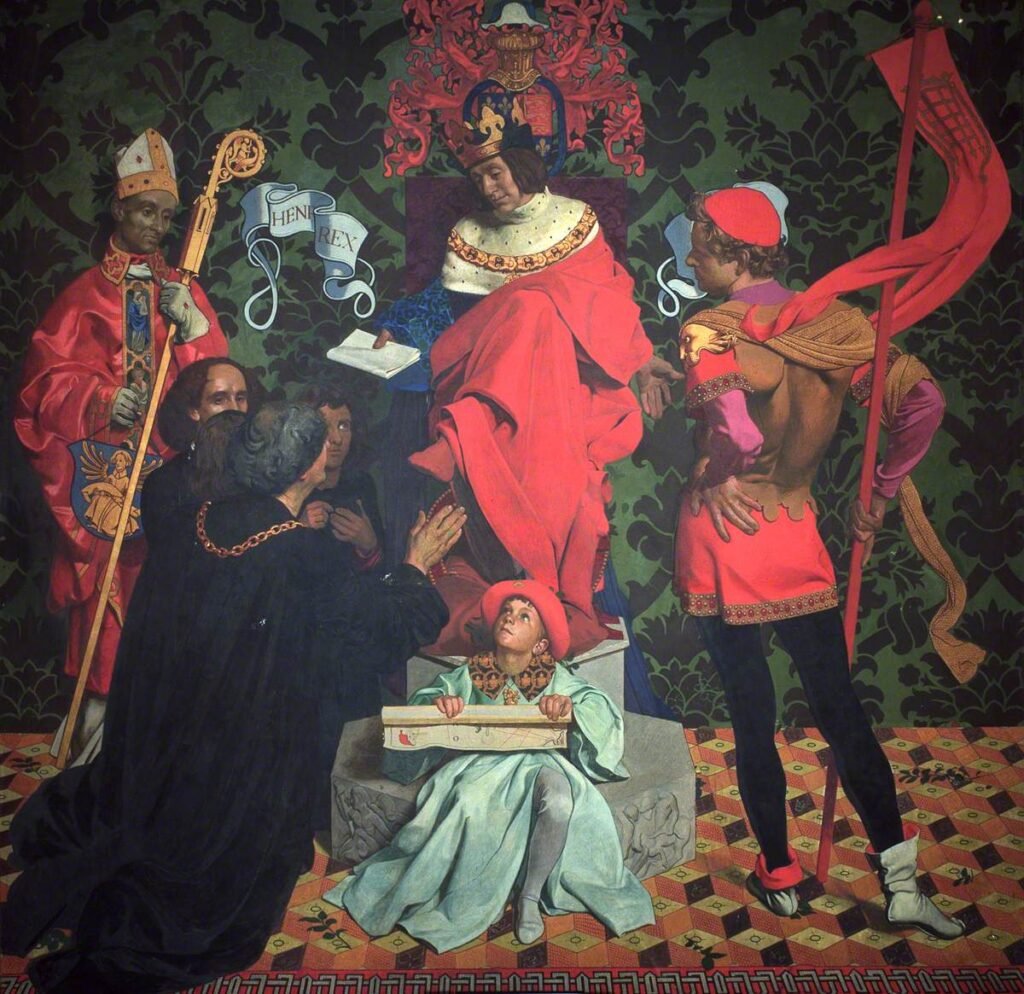
Henry VII (1485–1509): The Claim of Blood and Conquest
In the theatrical, high-stakes arena of Tudor statecraft, royal titles were far more than mere decorative honorifics. To the monarchs who wore the crown of England between 1485 and 1603, an official title was a sweeping declaration of political ambition, a theological manifesto, and a direct assertion of sovereign legitimacy.
From the battlefield usurper Henry VII to the iconic “Virgin Queen” Elizabeth I, the royal style of the Tudor dynasty underwent a dramatic, revolutionary evolution. Over the course of a single century, these titles reflected England’s bloody wars with France, its subjugation of Ireland, and the momentous spiritual rupture with the Papacy in Rome.
Henry VII (1485–1509): The Claim of Blood and Conquest
When the thirty-two-year-old Henry Tudor stood victorious over the battered corpse of Richard III at the Battle of Bosworth on August 22, 1485, his claim to the English crown was, on paper, extraordinarily tenuous. Descended through a bastard Beaufort line, the new king needed every symbol of authority he could muster to legitimize his new regime.
At his coronation on October 30, 1485, Henry VII officially received the traditional styles of his royal predecessors:
- King of England
- King of France (merely symbolic)
- Lord of Ireland
The inclusion of the French title was an inherited Plantagenet fiction. As historians note:
“From 1340, English monarchs, beginning with the Plantagenet king Edward III, asserted that they were the rightful kings of France. They fought the Hundred Years’ War (1337–1453), in part, to enforce this claim, but ultimately without success. From the early 16th century, the claim had lost any realistic prospect of fulfilment, although every English and, later, British monarch, from Edward to George III, styled themselves king or queen of France until 1801.”
For the remainder of his twenty-three-year reign, Henry VII’s domestic title regarding Ireland remained strictly ‘Lord of Ireland’ (Dominus Hiberniae). This title derived from the twelfth-century papal bull Laudabiliter, by which Pope Adrian IV had granted the Lordship of Ireland to the English Crown under papal suzerainty.
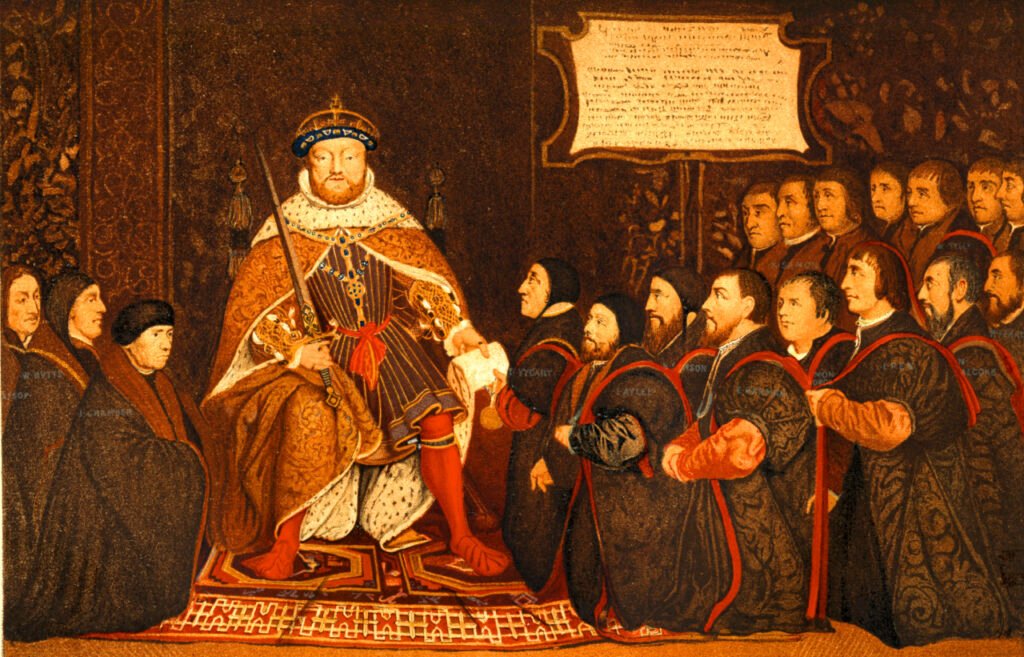
Henry VIII (1509–1547): Reformation and Royal Imperium
Upon his accession in April 1509, the charismatic, athletic seventeen-year-old Henry VIII inherited his father’s titles intact:
- King of England
- King of France (merely symbolic)
- Lord of Ireland
However, the “Great Matter”—Henry’s desperate struggle to annul his twenty-four-year marriage to Catherine of Aragon in order to marry Anne Boleyn—shattered this traditional style and fundamentally transformed the English monarchy.
1. Defender of the Faith (Fidei Defensor)
Before his breach with the Papacy, Henry VIII was a fierce champion of Catholic orthodoxy. In 1521, with the assistance of scholars like Thomas More, Henry authored the Assertio Septem Sacramentorum (Defence of the Seven Sacraments), a scathing critique of Martin Luther. In gratitude, Pope Leo X officially bestowed upon Henry the hereditary title Defender of the Faith (Fidei Defensor).
Following England’s break with Rome in the 1530s, Pope Paul III revoked the title and excommunicated the king. Unfazed, Henry VIII simply instructed the English Parliament to pass an Act in 1544 reinstating “Defender of the Faith” as an official title of the English Crown—reinterpreting it as the monarch’s duty to defend the faith of the newly established Church of England.
2. Supreme Head of the Church of England
Through the legislative genius of his chief minister, Thomas Cromwell, Henry VIII engineered the royal supremacy. The 1534 Act of Supremacy formally declared the monarch to be the ‘Supreme Head in earth of the Church of England’ (Ecclesiae Anglicanae in terra Supremum Caput).
3. King of Ireland
By the late 1530s, Henry’s advisors realized that because the title ‘Lord of Ireland’ originated from a papal grant, it left the English Crown’s authority in Ireland vulnerable to papal challenges. To eliminate this papal connection, Cromwell directed the Irish Parliament to pass the Crown of Ireland Act 1542. This officially created the title ‘King of Ireland’, elevating the territory from a lordship to a full kingdom united in personal union with the English Crown.
By the end of his reign, Henry VIII’s full official style stood as:
Henry the Eighth, by the Grace of God, King of England, France and Ireland, Defender of the Faith, and of the Church of England and also of Ireland in Earth Supreme Head.
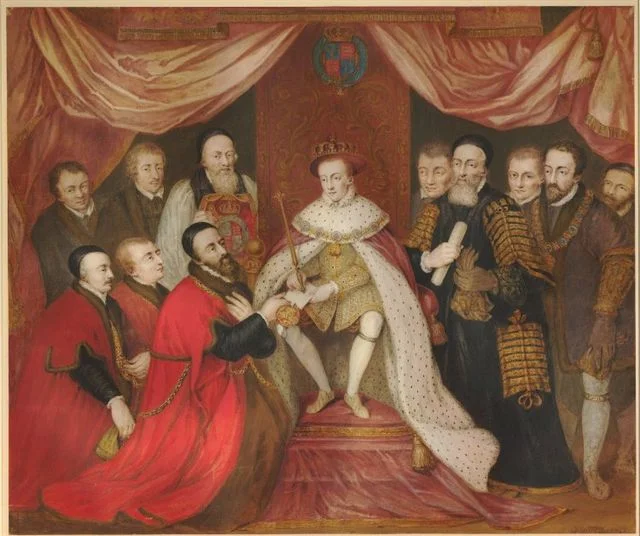
Edward VI (1547–1553): The Protestant Boy-King
When nine-year-old Edward VI succeeded his father in January 1547, he inherited a complete set of imperial and religious titles:
- King of England
- King of France (merely symbolic)
- King of Ireland
- Defender of the Faith
- Supreme Head of the Church of England and Ireland
Edward’s short, six-year reign was marked by an aggressive, uncompromising Protestant Reformation spearheaded by his Lord Protector, Edward Seymour, Duke of Somerset, and Archbishop Thomas Cranmer. Edward’s coronation in February 1547 was historic: he was the very first English monarch to be anointed directly as “Supreme Head of the Church”. In the eyes of his evangelical court, the young king was celebrated as a “second Josiah,” destined to purge his realm of papal idolatry.
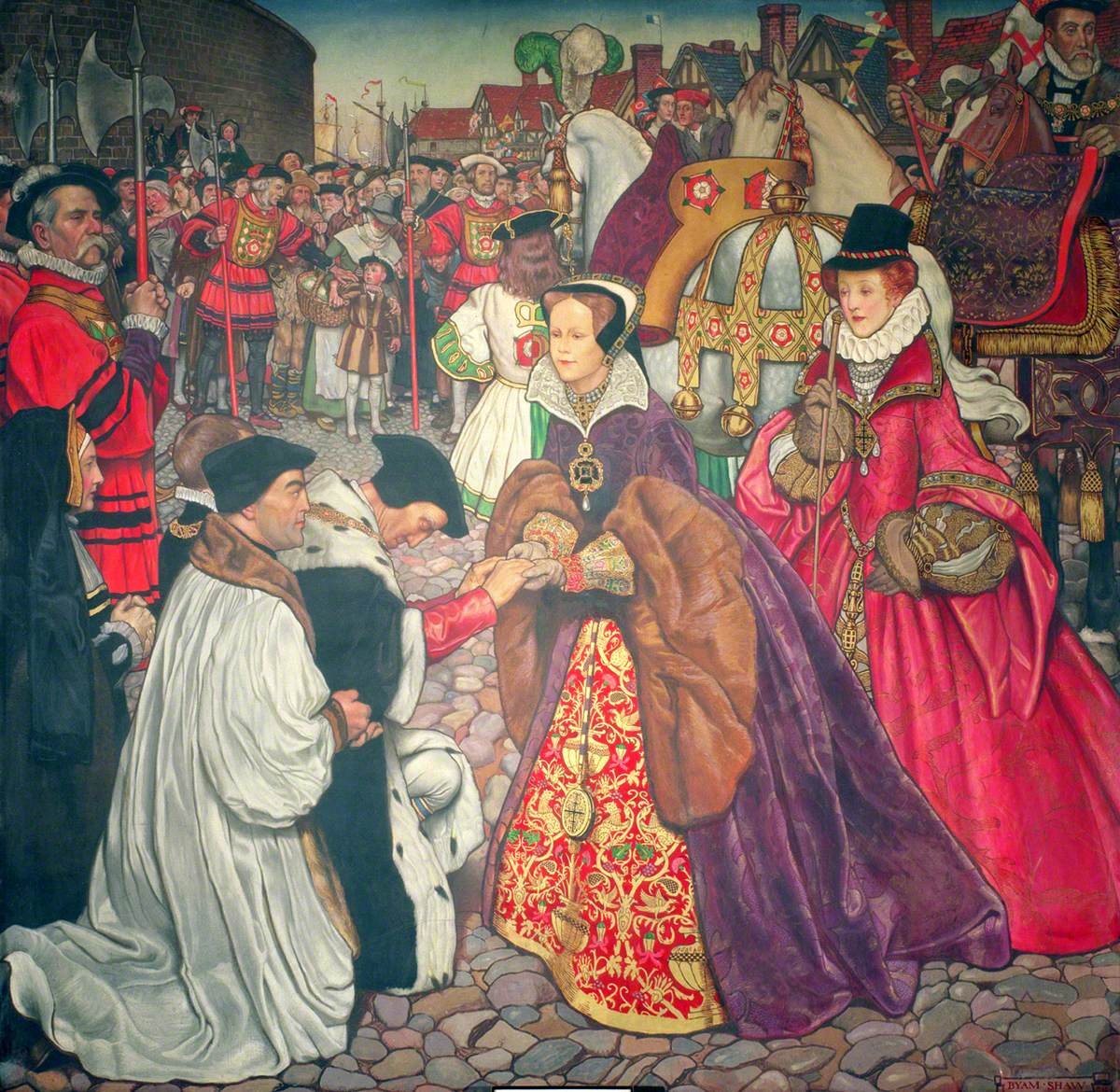
Mary I (1553–1558): The First Queen Regnant and the Imperial Marriage
Following her dramatic, triumphant defeat of the plot to place Lady Jane Grey on the throne in July 1553, Mary I made history as England’s first officially crowned queen regnant.
The Dilemma of the Supreme Headship
As a devout Roman Catholic, Mary was deeply repraved by her father’s anti-papal titles. However, upon her accession, she was legally compelled to style herself using the existing statutory titles, including Supreme Head of the Church. As biographer Anna Whitelock notes, Mary was crowned holding this title “whether she liked it or not”.
Once her first Parliament met in late 1553 and early 1554, Mary systematically repealed her father’s and brother’s religious legislation, formally repudiating the title of Supreme Head and reconciling England with Rome under Cardinal Reginald Pole.
The Joint Imperial Style with Philip of Spain
In July 1554, Mary married her cousin, Prince Philip of Spain (later King Philip II). The marriage treaty stipulated that Philip would share Mary’s royal titles for the duration of their marriage.
Upon the marriage, Garter King of Arms officially proclaimed their grand, joint, international style:
“Philip and Mary, by the grace of God, King and Queen of England, France, Naples, Jerusalem, and Ireland; Defenders of the Faith; Princes of Spain and Sicily; Archdukes of Austria; Dukes of Milan, Burgundy, and Brabant; Counts of Habsburg, Flanders, and Tyrol.”
In a fascinating overseas footnote, in 1554 Emperor Charles V abdicated the Kingdom of Chile, elevating his son Philip to the rank of King of Chile so that Philip would meet Mary on equal sovereign footing prior to their wedding. Consequently, from 1554 until her death in 1558, Mary held the unique, historical distinction of being the Queen Consort of Chile.
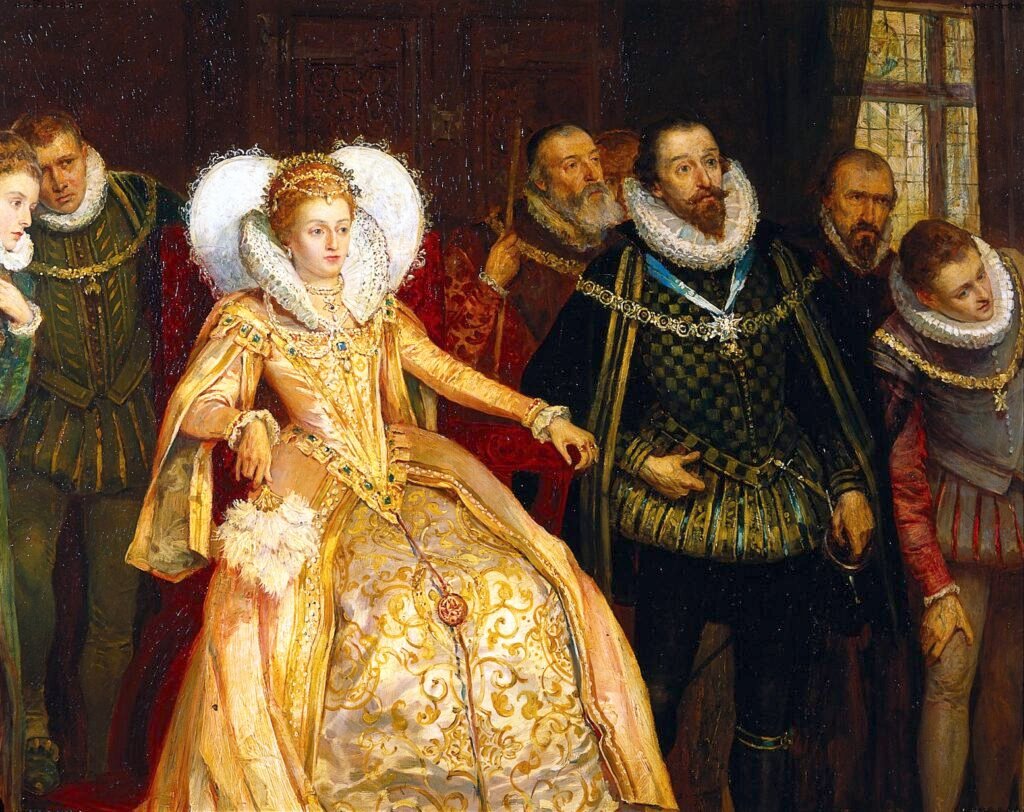
Credit: Wellcome Library, London. Wellcome Images
images@wellcome.ac.uk
http://wellcomeimages.org
John Dee performing an experiment before Queen Elizabeth I. Oil painting by Henry Gillard Glindoni.
Oil
By: Henry Gillard GlindoniPublished: –
Copyrighted work available under Creative Commons Attribution only licence CC BY 4.0 http://creativecommons.org/licenses/by/4.0/
Elizabeth I (1558–1603): The Virgin Queen and the Supreme Governor
When Elizabeth I inherited the crown upon her sister’s death on November 17, 1558, she restored the Protestant national Church while navigating a delicate middle path (via media).
Supreme Governor
Mindful of Catholic objections that Christ alone was the head of the Church, as well as arguments from both Catholics and radical Calvinists that a woman could not be the “Head” of a spiritual body, Elizabeth adopted a brilliant compromise. In the Act of Supremacy 1558, she replaced “Supreme Head” with the title ‘Supreme Governor of the Church of England’. This subtle shift preserved her absolute jurisdictional authority over the clergy without claiming spiritual supremacy over doctrine.
Throughout her famous forty-four-year reign, Elizabeth I’s full royal style was maintained as:
Elizabeth, by the Grace of God, Queen of England, France, and Ireland, Defender of the Faith, and Supreme Governor of the Church of England and Ireland.
Summary of Tudor Royal Styles
| Monarch | Primary Territorial Titles | Religious Titles |
| Henry VII (1485–1509) | King of England, King of France (symbolic), Lord of Ireland | None (Traditional Catholic Sovereign) |
| Henry VIII (1509–1547) | King of England, King of France (symbolic), Lord of Ireland > King of Ireland (1542) | Defender of the Faith (1521), Supreme Head of the Church of England (1534) |
| Edward VI (1547–1553) | King of England, King of France (symbolic), King of Ireland | Defender of the Faith, Supreme Head of the Church of England and Ireland |
| Mary I (1553–1558) | Queen of England, France, Ireland (+ Joint Spanish/Habsburg titles & Queen Consort of Chile with Philip II) | Defender of the Faith; Supreme Head (reluctantly at accession, later abolished) |
| Elizabeth I (1558–1603) | Queen of England, King of France (symbolic), Queen of Ireland | Defender of the Faith, Supreme Governor of the Church of England and Ireland |
References & Sources
- Borman, Tracy. Thomas Cromwell: The Untold Story of Henry VIII’s Most Faithful Servant. New York: Atlantic Monthly Press, 2014.
- Penn, Thomas. Winter King: Henry VII and the Dawn of Tudor England. London: Allen Lane, 2011.
- Skidmore, Chris. Edward VI: The Lost King of England. London: Weidenfeld & Nicolson, 2007.
- Somerset, Anne. Elizabeth I. New York: Anchor Books, 1991.
- Whitelock, Anna. Mary Tudor: Princess, Bastard, Queen. New York: Random House, 2009.
- Wikipedia. “English claims to the French throne.” Disponível em: https://en.wikipedia.org/wiki/English_claims_to_the_French_throne
- Wikipedia. “Lordship of Ireland.” Disponível em: https://en.wikipedia.org/wiki/Lordship_of_Ireland
- Revista Marina. “A Queen of England, a Queen of Chile, and the Armada Portrait.” Disponível em: https://revistamarina.cl/es/articulo/a-queen-of-england-a-queen-of-chile-and-the-armada-portrait
Read also: Birthplaces and Final Resting Places of the Tudor Queens – VERITAS TEMPORIS FILIA