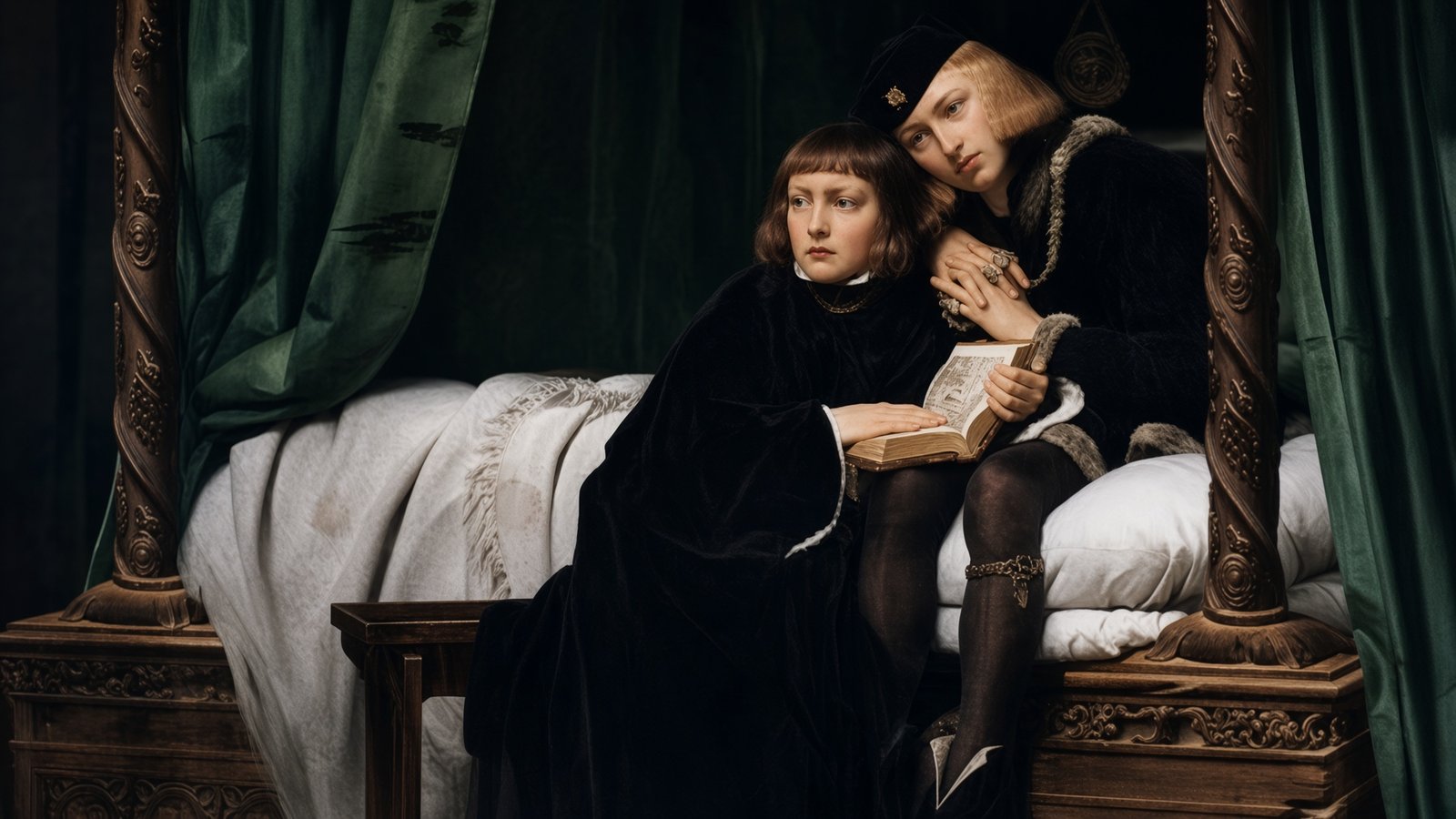
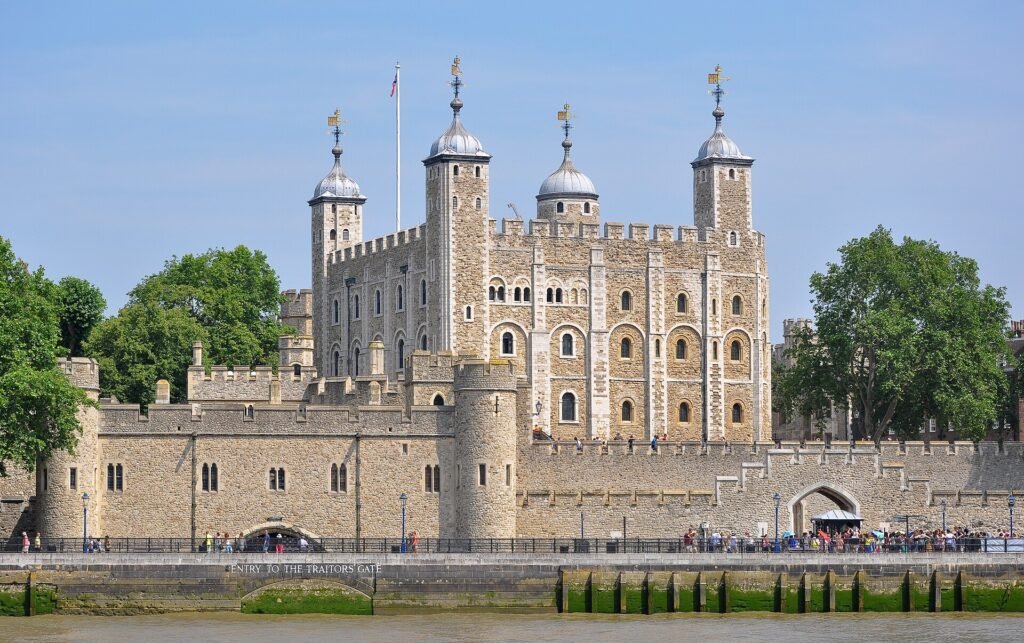
Among the dark and heavily shadowed annals of the Tower of London, few narratives are as haunting as those involving the child captives of the Tudor era. While popular history frequently revisited the fate of the Princes in the Tower, Edward V and Richard, Duke of York, who vanished during the reign of Richard III in 1483, the sixteenth century witnessed its own quiet, devastating tragedies involving children locked away behind the fortress’s stone walls.
During the reign of Henry VIII, two young boys of royal blood were dragged into the unforgiving machinery of Tudor statecraft: Henry Pole the Younger and Edward Courtenay. Both were pre-adolescents or young teenagers when they entered the Tower in the late 1530s, yet their fates diverged dramatically. Their stories not only highlight the paranoid brutality of Henry VIII’s later years but also cast a revealing light on the complex, often misunderstood character of his daughter, Queen Mary I.
The Fall of the House of Exeter and the Exeter Conspiracy
To understand how two young boys came to be imprisoned in the Tower, one must examine the political and religious upheaval of the late 1530s. Following Henry VIII’s rupture with the Papacy and his marriage to Anne Boleyn, resistance to the Royal Supremacy emerged from some of the most ancient and noble houses in England. Chief among these was the Pole family, descended from George, Duke of Clarence (brother to Kings Edward IV and Richard III), and their close allies, the Courtenays, descended from Edward IV’s daughter, Catherine of York.
The catalyst for their downfall was Cardinal Reginald Pole. Living in self-imposed exile on the Continent, Reginald had published a scathing theological treatise titled Pro ecclesiasticae unitatis defensione (De unitate), which publicly denounced Henry VIII as a tyrant and rejected his title as Supreme Head of the Church. Enraged by the Cardinal’s defiance, King Henry VIII turned his vengeance upon Reginald’s family remaining in England.
The dominoes began to fall on August 29, 1538, when Sir Geoffrey Pole, Reginald’s younger brother, was arrested and placed in the Tower of London. Banned from court and subjected to relentless interrogation regarding correspondence with his exiled brother, Geoffrey’s spirit completely broke. In deep psychological distress, he attempted suicide three times while in custody. On January 2, 1539, Geoffrey Pole was officially pardoned by the Crown, but the information extracted from him during his breakdown sealed the fate of his entire family.
Based on the evidence gleaned from Geoffrey, the King’s officials moved swiftly. Henry Pole, 1st Baron Montagu (Geoffrey and Reginald’s eldest brother), was arrested for high treason alongside his brother-in-law, Sir Edward Neville, and Henry Courtenay, Marquis of Exeter. Exeter’s family, his wife, Gertrude Blount, and his twelve-year-old son, Edward Courtenay, were swept up in the dragnet. Shortly thereafter, the matriarch of the family, Margaret Pole, Countess of Salisbury, was also arrested and imprisoned in the Tower.
The adult men, Montagu, Exeter, and Neville, were tried at Westminster, found guilty of conspiring against the King, and executed on Tower Hill on January 9, 1539. Margaret Pole suffered a notoriously horrific execution two years later, on May 27, 1541. Yet, amid this destruction of two premier noble houses, two young boys were left behind in the dark: Henry Pole the Younger and Edward Courtenay.
Henry Pole the Younger: A Silent, Systemic Neglect
The fate of Henry Pole the Younger remains one of the Tower of London’s most enduring and somber mysteries. While his exact birth year is unknown, estimates vary widely between 1521 and 1527, with historian Alison Weir proposing the latter date, he was almost certainly a young adolescent in his early teens when his father was executed in 1539.
Following the execution of Lord Montagu in 1539 and the brutal beheading of his grandmother, the aged Countess of Salisbury, in 1541, young Henry remained a forgotten captive in the Tower. The severe public backlash following the Countess’s execution likely deterred Henry VIII from ordering a formal, public execution of the young boy. Ordering the death of a young child on the scaffold would have generated overwhelming outrage across England and Catholic Europe.
Instead, the Crown opted for a quieter, more insidious fate. Denied a pardon in 1540, young Henry continued to receive a basic food allowance from the King’s Exchequer. However, stripped of his lands, his titles, and his entire family, he was left in strict confinement.
Historical records illustrate a stark, deliberate difference in how Henry was treated compared to other captives. While his fellow child-prisoner, Edward Courtenay, was eventually granted a tutor and allowed relative freedom within the fortress bounds, the French Ambassador, Charles de Marillac, noted in a 1540 despatch that young Henry Pole was “poorly and strictly kept and not desired to know anything.” His exiled uncle, Cardinal Reginald Pole, later lamented the boy’s tragic condition from afar, poignantly referring to him as the “remaining hope of our race,” a title that underscores the crushing loss of the family’s lineage.
Ultimately, Henry Pole the Younger simply vanished from history. The most haunting theory regarding his disappearance is that he died of deliberate cruelty or systemic neglect. The recorded food bills paid by the Crown for his maintenance simply ceased around 1542 or 1543. Because there is no record of his burial or a formal execution, it is highly probable that he succumbed to illness, harsh treatment, or slow starvation within his cell.
The silence of the historical record is itself telling. Had Henry Pole the Younger still been alive when the Catholic Queen Mary I ascended the throne in July 1553, she unquestionably would have released her beloved cousin’s nephew. His death in the dark walls of the Tower remains a tragic symbol of Henrician paranoia.
Edward Courtenay: The Child Captive Who Survived
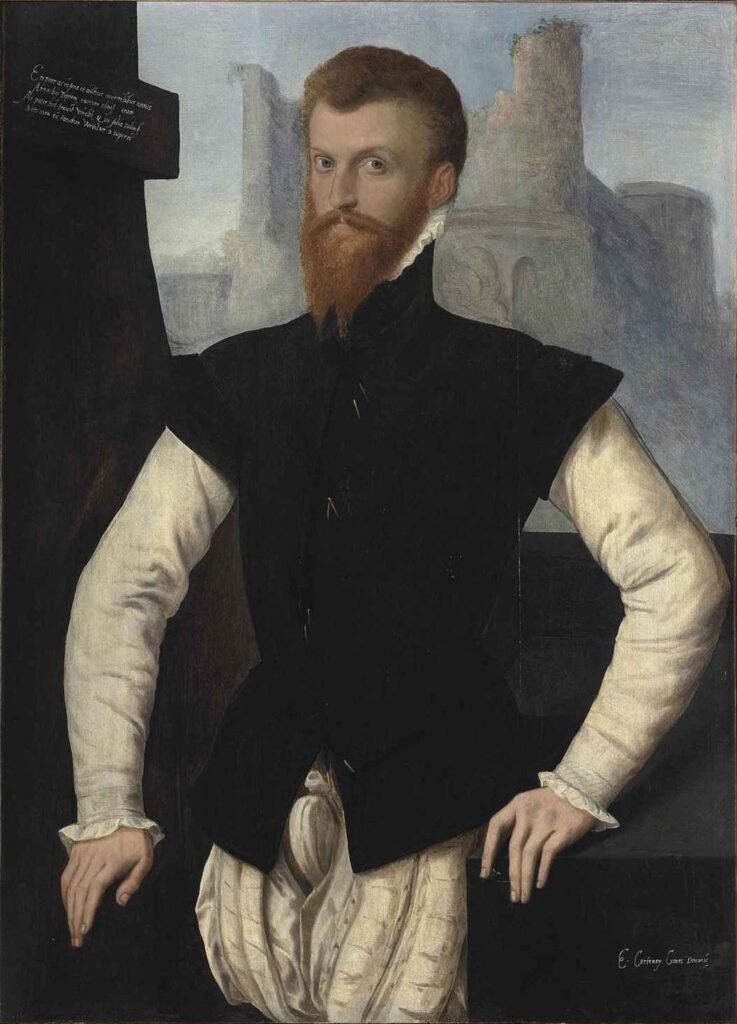
By contrast, the story of Edward Courtenay offers a different perspective on life inside the Tower. Born around 1526, Courtenay was approximately twelve years old when he was swept into the Tower alongside his father, the Marquis of Exeter, and his mother, Gertrude Blount, in late 1538.
Unlike young Henry Pole, Courtenay survived the harsh years of Henry VIII’s final reign and the entire reign of Edward VI. For fifteen years, the Tower was the only world Courtenay knew. During his long imprisonment, he managed to educate himself, learning languages and music, though the isolation stunted his social development and emotional maturity. Both Henry VIII and his young son, Edward VI, viewed Courtenay with extreme suspicion, regarding him as a dangerous living embodiment of the White Rose Yorkist claim to the throne.
It was not until August 3, 1553, that Courtenay’s fortunes changed. Following the collapse of Lady Jane Grey’s nine-day reign, the newly proclaimed Queen Mary I made her triumphant state entry into London and proceeded directly to the Tower. There, in a famous emotional scene, Mary liberated the long-term political prisoners who had languished under her father and brother. Among them were the Duke of Norfolk, Stephen Gardiner, and her young cousin, Edward Courtenay.
Mary restored Courtenay to his family’s lands and created him Earl of Devonshire. For a brief period, he was even considered by many English nobles as the most suitable husband for the Queen herself. However, years of strict confinement had left Courtenay politically naive and easily manipulated. In 1554, he became foolishly involved in Wyatt’s Rebellion, a Protestant rising aimed at preventing Mary’s marriage to Philip of Spain.
Despite his treasonous involvement in a plot that threatened her crown, Mary I displayed remarkable clemency toward her cousin. While her father, Henry VIII, or her grandfather, Henry VII, would have executed Courtenay without hesitation, Mary spared his life. Though he was briefly returned to custody, she refrained from executing him, eventually permitting him to go into exile in Italy, where he died in Padua in 1556.
Re-Evaluating Queen Mary I: Clemency Versus Tyranny
The contrasting fates of these young captives provide valuable insights into the Tudor monarchs and help re-evaluate the historical reputation of Queen Mary I, a ruler who is still frequently depicted solely as a tyrannical villain, “Bloody Mary.”
A rigorous examination of Tudor history reveals a pattern of extreme harshness toward child claimants among Mary’s predecessors:
- Henry VII placed Edward Plantagenet, Earl of Warwick, a child of just ten years old, in the Tower of London in 1485, keeping him confined for fourteen years before executing him on trumped-up charges in 1499.
- Henry VIII effectively consigned Henry Pole the Younger to a slow death by neglect in the Tower and kept Edward Courtenay locked away for nearly a decade.
- Edward VI maintained his cousin Courtenay’s strict imprisonment throughout his reign out of fear of a Catholic or Yorkist usurpation.
Queen Mary I, by contrast, acted with notable restraint when dealing with dynastic threats. Upon taking the throne in 1553, she actively sought to show mercy. When she arrived at the Tower, she immediately released Edward Courtenay and restored his heritage.
Furthermore, her handling of Lady Jane Grey is often misunderstood. Contrary to popular belief, Mary did not send Jane to the Tower as a prisoner; Jane was already residing in the royal apartments of the Tower in preparation for her coronation when her regime collapsed. Even after an attempted coup that came terrifyingly close to stripping Mary of her birthright, Mary initially refused to execute the seventeen-year-old Jane, intending to grant her a full pardon.
It was only after Jane’s father, the Duke of Suffolk, launched a second armed rising, Wyatt’s Rebellion, in early 1554 that Mary was forced by her Council to sign Jane’s death warrant. Mary’s justification for executing Jane Grey was grounded in an actual, repeated treasonous rebellion that threatened the stability of the realm, rather than paranoia over a theoretical threat.
Mary’s inherent inclination toward mercy was further demonstrated by her treatment of Jane Grey’s surviving sisters, Lady Katherine Grey and Lady Mary Grey. Rather than executing or imprisoning them, Mary welcomed them into her royal court, appointed them to her Privy Chamber, and treated them with notable leniency.
Conclusion
The stories of Henry Pole the Younger, Edward Courtenay, and Lady Jane Grey illustrate the brutal political realities of Tudor succession. Under Henry VIII, youth offered no shield against state violence and deliberate neglect; boys like Henry Pole the Younger were quietly consumed by the stone walls of the Tower simply for carrying the wrong blood in their veins.
When viewed against the actions of her father and grandfather, Mary I’s liberation of long-held child captives and her initial reluctance to execute her rivals demonstrate a degree of personal clemency rarely credited to her. The silence that surrounds the death of young Henry Pole serves as a permanent, somber indictment of Henrician tyranny, while the survival and release of Edward Courtenay stands as a testament to the brief, compassionate impulses that occasionally surfaced within the Tudor dynasty.
—
References & Sources
Loades, David. Mary I: Queen of England. Basil Blackwell, 1989.
Ridgway, Claire. On This Day in Tudor History. MadeGlobal Publishing, 2012.
Englandcast. “Henry Pole the Younger.” The Renaissance English History Podcast, 2024. Available at: Henry Pole the Younger: A Forgotten Enigma – Renaissance English History Podcast
Weir, Alison. The Princes in the Tower. Ballantine Books, 1992.
Read also: The Boys Born in the Tower of London: The Lost Heirs of Elizabeth I – VERITAS TEMPORIS FILIA

One thought on “Forgotten Captives: The Tragic Fate of Henry Pole the Younger and Edward Courtenay in the Tower of London”